New Work of Mercy: Care For Our Common Home

file.aspx

Pope Francis has followed up his writing of Laudato Si’: On Care For Our Common Home, by making September 1st a World Day of Prayer for the Care of Creation. To emphasize the need to be good stewards of this planet, Pope Francis also announced a new work of mercy: care for our common home.  Pope Francis says, “human life itself and everything it embraces includes care for our common home.”

Message

He continues in his message released today, “As a spiritual work of mercy, care for our common home calls for a grateful contemplation of God’s world which allows us to discover in each thing a teaching which God wishes to hand on to us. As a corporal work of mercy, care for our common home requires simple daily gestures which break with the logic of violence, exploitation and selfishness and makes itself felt in every action that seeks to build a better world.”

Pope Francis addresses some tough issues in his message and does not shy away from describing the major negative impacts humans have had on the planet. He says, “God gave us a bountiful garden, but we have turned it into a polluted wasteland of debris, desolation and filth.” He continues, “We must not be indifferent or resigned to the loss of biodiversity and the destruction of ecosystems, often caused by our irresponsible and selfish behavior. Because of us, thousands of species will no longer give glory to God by their very existence, nor convey their message to us. We have no such right.”

In the sixth section of his message, he offers hope that God is with us and will never abandons us. Let us end with the prayer he wrote:

“O God of the poor,
help us to rescue the abandoned
and forgotten of this earth,
who are so precious in your eyes…

God of love, show us our place in this world
as channels of your love
for all the creatures of this earth,
God of mercy, may we receive your forgiveness
and convey your mercy throughout our common home.”

Praise be to you!

Amen.

The full message released today can be found Here and a also Video of press conference about the World Day of Prayer for Care of Creation


Woodland Trail and Restoration

IMG_3981
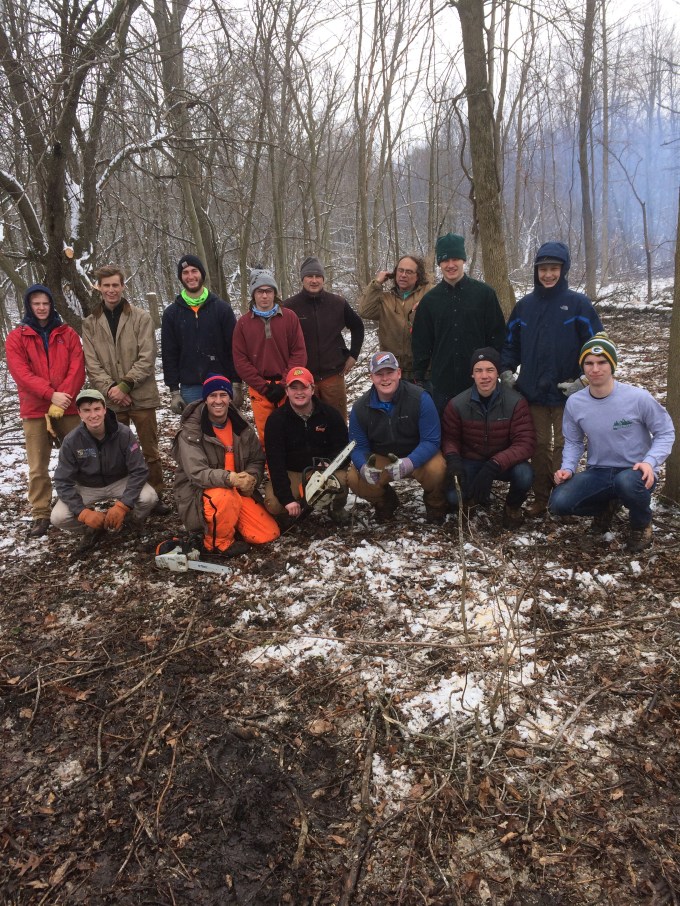
The Woodland Crew: Quentin, Charlie, Steven, Jack, Will, Kelly, and Joe

Today we completed the 3 acre woodland restoration at the Schoenstatt Retreat Center in Waukesha, WI. Despite the intermittent rain showers, 7 brave souls worked to cut and remove the remaining invasive European buckthorn from this amazing  woodland that is full of huge oak and other tree species.

This was a project that began in May of this year (see Woodland Restoration post) and has included the creation of a woodland trail, benches, and educational signage thanks to the   58 volunteer hours!! Schoenstatt Sisters and volunteers have also placed wood chips on the trail which has become a favorite for some Sisters and those on retreat to walk and pray.
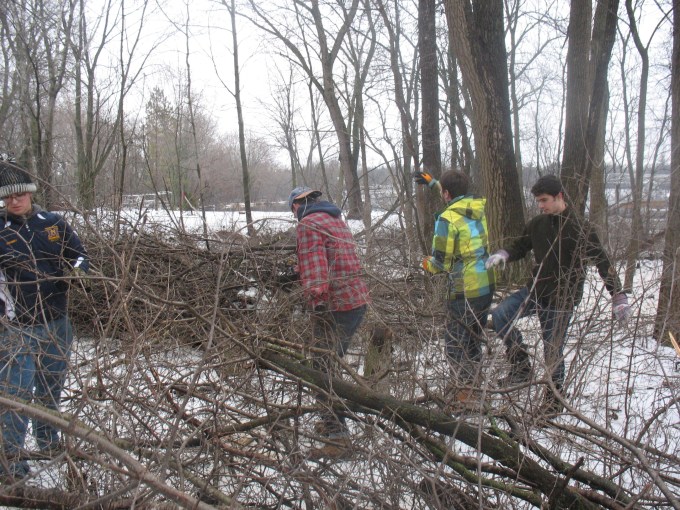
This woodland project has also run alongside our bluebird nest box program on the property (see Bluebird Nest Box post) and the beginnings of several other long-term stewardship projects like a 12 acre woodland restoration/trail, butterfly garden, and a 2 acre oak-opening “prayer-e” planting with native wildflowers and grasses.

“The entire material universe speaks of God’s love, his boundless affection for us. Soil, water, mountains – everything is, as it were, a caress of God.”     -Pope Francis, Laudato Si’

IMG_3944
Steve and Jack installing a bench for the woodland trail


Exploring the Scuppernong Prairie


IMG_3496
The hike in the southern Kettle Moraine

Sunday was our hike in the southern Kettle Moraine’s Scuppernong Prairie. This 3,500 acre prairie is the largest mesic prairie east of the Mississippi. It covers 2 State Natural Areas and is home to many interesting, unique, and rare plants and animals.

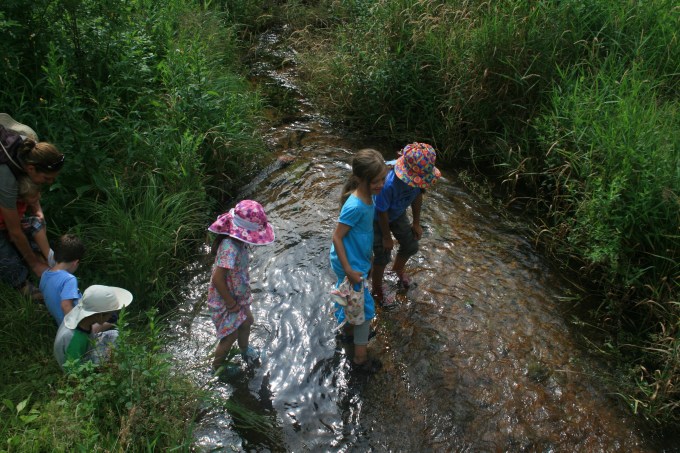
This prairie contains hundreds of species of plants and many grassland bird species not very common in southern WI anymore. Prairie’s require fire to remove the bushes and trees that naturally invade them. The main tree species found in this prairie is Bur Oak which has especially thick bark to handle spring/fall fires. Prior to European Settlement, Bison and Elk also roamed these prairies and burning helped with hunting of these species by the Native Americans (the main fire starters). The scuppernong prairie also contains 2 spring fed creeks that are home to native brook trout. Armed with bug nets, we were able to explore one of southern Wisconsin’s natural treasures.

IMG_3568
Playing in the Paradise Springs Creek

Loew’s Lake Ice Age Trail Hike

IMG_3021
View overlooking the Oconomowoc River

The Loew’s Lake Unit of the Kettle Moraine State Forest is located in the heart of the Mid Kettle Moraine near Holy Hill. It was at one time slated for subdivision development but was soon recognized to contain many unique geological and ecological features. This kettle lake is 24 acres in size with the Oconomowoc River running through it. The park has tamarack wetlands, upland forests and prairies. The Ice Age Trail runs 5 miles though the 1000 acre property.

7 of us met at the emerald drive parking lot and headed out on a trail to see the great views of the entrance of the Oconomowoc River to Loew’s Lake. On the bridge we saw many small mouth and large mouth bass and several canoe/kayakers making their way to the lake from the Hwy Q drop-in several miles down stream. We then hiked several miles of the ice age trail north to emerald drive.

Laudato Si’ Project’s next outing will be Sunday, July 17th at 2pm in the Southern Kettle Moraine. We will be hiking and learning about the Scuppernong Prairie State Natural Area while in full bloom. We will also hike the Ice Age Trail that runs through the area. Meet at the “Rainbow Springs” parking lot off of Hwy N.


Celebrating the 1 Year Anniversary of the Encyclical “Laudato Si”

IMG_3001
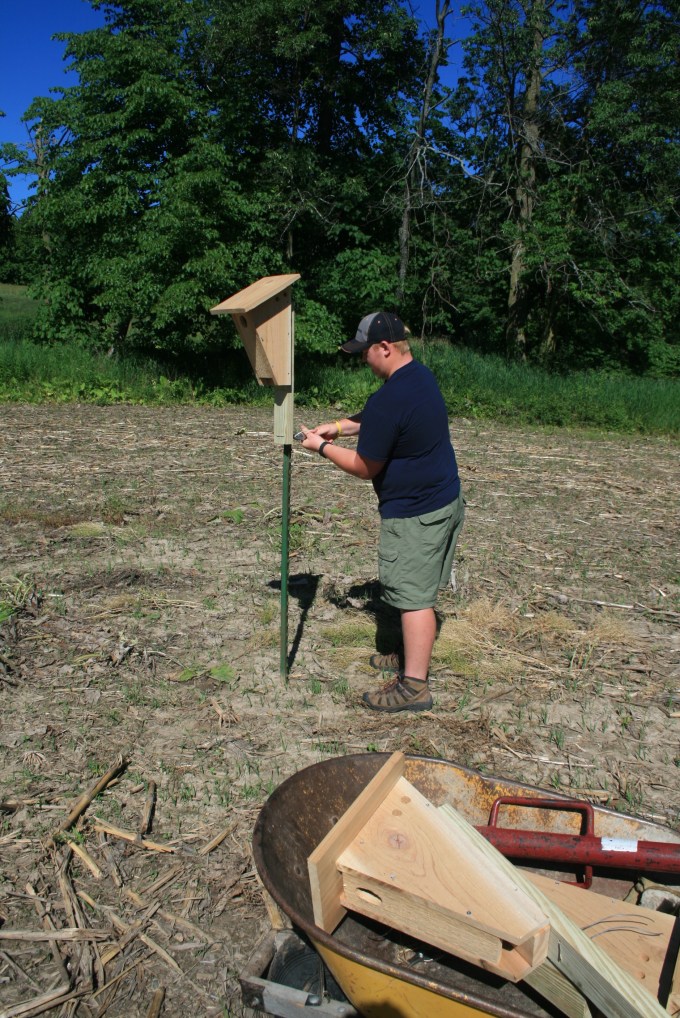
Patrick Donohue of MUHS installs bluebird houses he built on a 8 acre prairie planting.

June 18th marks the 1 year anniversary of Pope Francis’ encyclical Laudato Si’: On Care for Our Common Home. Within the last 2 weeks, Laudato Si’ Project has been busy celebrating by taking part in a wide array of activities.

1.) Two members of Laudato Si’ Project attended the “Green Schools Consortium of Milwaukee.” This conference had great speakers and educational sessions on green infrastructure and sustainable building, all aimed at engaging students in sustainability.

2.) We continued stewardship work and woodland restoration at the Schoenstatt Retreat Center. Our woodland trail with signs is now complete (about 2/3 of the buckthorn has been removed from the woodland- stay tuned for another work day this summer).

3.) We started a Laudato Si’ Project Team at St. Gabriel’s Parish in Hubertus that will also be doing an encyclical study.

4.) Patrick Donohue of Marquette University High School built 3 bluebird nest boxes and  put them on the newly planted 8 acre prairie at HH ski club. While in the Mid Kettle Moraine, he helped with turtle monitoring on the Schoofs Preserve.

IMG_3008
Patrick Donohue helps with turtle monitoring on the Schoofs Preserve

5.) The Archdiocese of Milwaukee has written a nice article about Laudato Si’ Project in their June Newsletter. You can read it Here.

6.) This Saturday, June 25th, all are welcome to come out with us to the Mid Kettle Moraine to hike a section of the Ice Age Trail and explore the 1000 acre Loew’s Lake Unit. Please contact me if you are interested.

Lastly, the Vatican’s “Pontifical Council for Justice and Peace” launched a new website dedicated to the Laudato Si’ efforts around the world to put its teaching into practice. http://www.laudatosi.va/content/giustiziaepace/en/speciale-laudato-si.html


Conservation in the Mid Kettle Moraine

IMG_2900
Mid Kettle Moraine Property

Laudato Si’ Project has teamed up with Ozaukee Washington Land Trust and Tall Pines Conservancy to help preserve a beautiful property in the Mid Kettle Moraine. We were joined by botanists from the Milwaukee Public Museum and the Southeastern Wisconsin Regional Planning Commission (SEWRPC). The botanists were doing a property inventory and collecting specimens for record keeping. Because of the diversity of habitat types on the parcel; wetland, upland, grassland- the diversity of plant species is outstanding. The private property has a “Natural Area” designation as a result of the presence of several high quality community types, some of which are still in pre-european settlement condition. Although the total plant inventory is not complete yet, at least 2 WI threatened plant species were found, one of which has never before been found in Washington County.

IMG_2916
Botanists from Milwaukee Public Museum and SEWRPC collecting and recording species 

Shoreline Restoration

IMG_2800
Preserve on North Lake

Saturday was a shoreline restoration day at a Tall Pines Conservancy preserve on North Lake. It is a small preserve (under an acre) but has a large importance. This is due to the ephemeral pond ( dries up mid-late summer) that supports a wide diversity of insects and amphibians. This preserve has been spared the fate of most other lots in the area and was not filled 10 or more feet to allow building. Laudato Si’ Project brought MUHS students this past winter to remove buckthorn that had invaded the preserve (pictured below).

IMG_9010
Past buckthorn removal with Marquette University High School students

The focus on Saturday was restoring the 65 feet of shoreline on North Lake. Much of the shoreline was being eroded and because of past buckthorn invasion, native plants were not present to hold the soil. To accomplish this bank stabilization, Herb from Sandy Bottom Nursery of Delefield brought in “bio-logs” which are made from coconut husk. These 10 foot logs hold the shoreline in place while the plants planted into them establish. The bio-logs also wick moisture up into the roots while the plants are young. This use of bio-logs is a great alternative to traditional rip-rap used on many shorelines. Restrictions on use of rip-rap has been tightened due to its inability to reduce lawn fertilizer runoff and its lack of habitat for young fish and amphibians. These two issues exacerbate the need for lake weed cutting and fish stocking.

Arrowhead High School student Mackenzie and Tall Pines Conservancy biologist, Jill Bedford, were also on hand to help complete the project. Because the shoreline was very wet, native species were selected to handle those moisture conditions. Sunlight also varied, with some places being in full sun while others being in complete shade. The species chosen were several types of sedges, rush, and iris. Also planted behind the bio-logs were dogwoods, lobelia, and aster. The bio-logs will decompose over a few years and by that time the shoreline will be a matrix of plants and roots- reducing soil erosion while provided vital shoreline habitat for fish, amphibians, and insects.


Prairie Planting

2016-03-14_0001

Today we completed an 8 acre prairie planting at Heiliger Huegel Ski Club near Holy Hill. We helped HH apply for funding through the Natural Resources Conservation Service (NRCS) and also did the technical planning. This planting was for “pollinator habitat” which means it will have a heavy concentration of native wildflowers blooming from May to November. This ensures bees, butterflies, etc have a food source throughout their life cycle. Of course, it will also benefit a tremendous amount of other wildlife, stop erosion, and eliminate fertilizer runoff.

IMG_2732
Separating the seed according to size

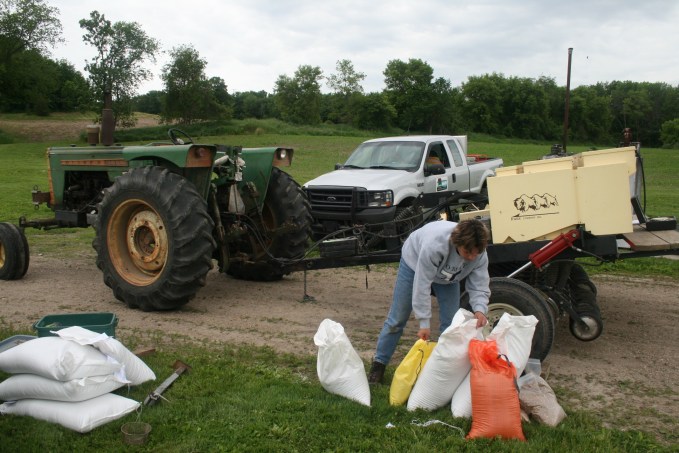
To seed the prairie, DNR wildlife technician Angie Rusch brought down the Truax no-till seed drill. It was then calibrated to ensure that the seed would be planted evenly throughout the 8 acre planting. Wally Hembel, who’s family had farmed the land since the 1920’s, brought his 1968 tractor to do the planting. The tricky part about prairie seeding is that the seed is very different sizes. That is why the seed drill has 3 compartments; small, large/fluffy, and cover crop. Some prairie seed may be large and an ounce might be 800 seeds, whereas another prairie plant might be 250,000 seeds per ounce.

Prairie plants put most of the energy in the first 2 years into building enormous root systems. Some prairie plants, like compass plant, have roots that go nearly 15 feet down! This is what allows a prairie to last through every drought, flood, fire, and winter Wisconsin throws at it. The actually planting took about 4 hours with only a few machine malfunctions. Now, with thunderstorms in the forecast, it is time to let nature do what it does best- bring life.


Beekeeping 101

IMG_2692
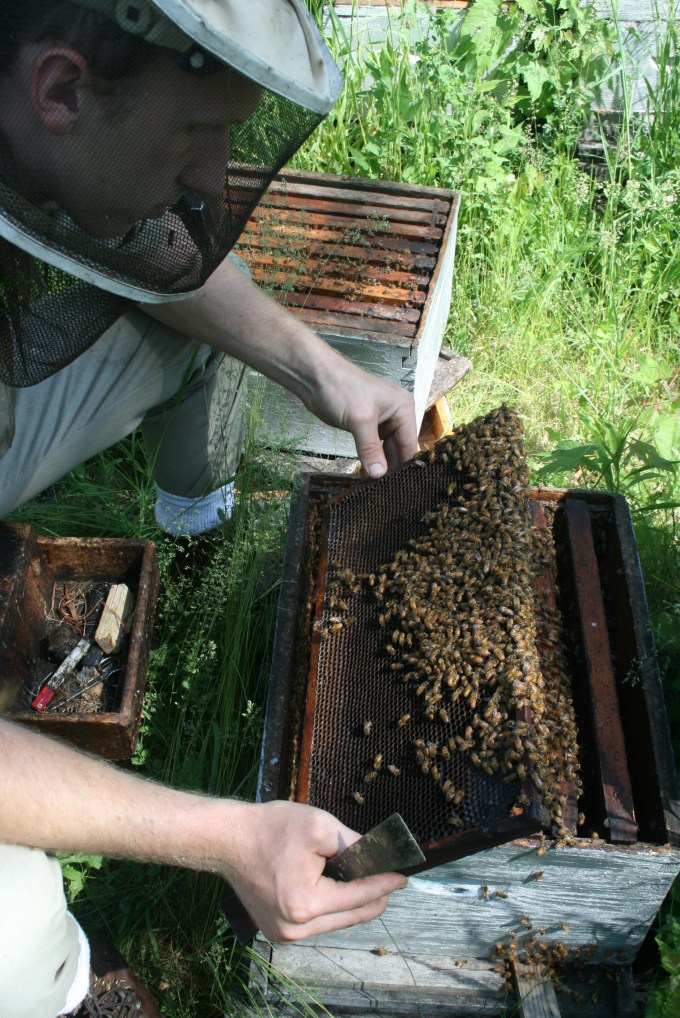
Beekeeper Christian Diehnelt checks one of the hives on the Meyer property

I have had the privilege of having bee hives on my land for the last 5 years. Two beekeepers, Roland and Christian Diehnelt, who are a father and son 5th and 6th generation beekeepers, take care of the hives placed on my land. In return, my family gets a portion of the organic, raw honey they produce. Today, they allowed me to help with their maintenance and check up of the 26 hives.


During their visit, they check to see the  success of each hive by first pumping smoke into the hive to calm the bees. They then pull out the frames and check for honey, new bee eggs and larvae, clip the queen’s wings, and add new “supers” (bee hive boxes). All worker bees seen in the picture are female and they are the ones out foraging. The males are called drones and about 20-30 of them get to mate with the queen.

Bees forage within a 2 mile radius of the hives. They collect pollen, their protein source, and also flower nectar, their carbohydrate. These are used to raise and feed young, as well as, provide a food source for the winter months. Many beekeepers have been dealing with a lot of different issues affecting their hives. You may have heard of colony collapse. My beekeepers (and beekeepers all over the country) have also been dealing with lots of dead hives thought to be caused by certain pesticides called neonicotinoides. But it is not just the European Honey Bee being affected. Many of our native pollinator populations have seen dramatic decline because of pesticides, disease, and loss of habitat. This is a big reason why planting native flowers and prairies is so important. In fact, we are planting an 8 acre prairie next week for a land owner as “pollinator habitat” (very heavy in flowering plants from May through October).

Turtle Monitoring

IMG_2503
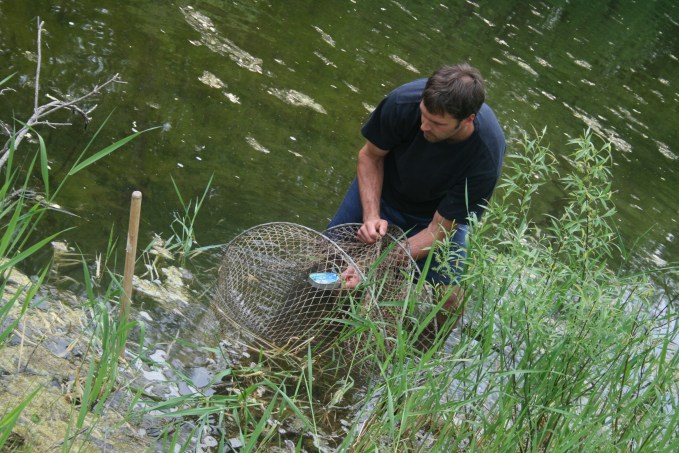
Placing the bait (sardines) in the turtle monitoring trap.

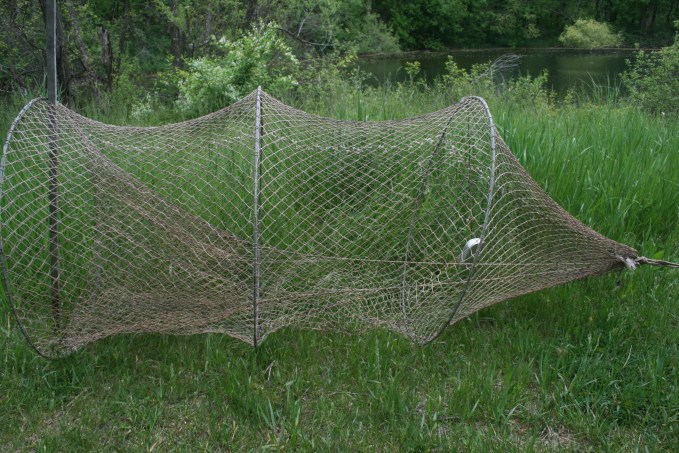
Late May begins the turtle monitoring season for the Ozaukee Washington Land Trust. I was asked to be in charge of bird and turtle monitoring for the Schoofs Preserve in Washington County, WI. The Schoofs Preserve contains a 1-acre pond which is perfect for turtle monitoring. The purpose is to survey the types of turtles present and to get an idea of population size and structure. Turtle traps consist of 3-hoops covered with netting and an open section on the funnel end (see picture below). Sardines are placed inside to attract the turtles which can get in but not out. Traps are placed in 2-3 feet of water and the top 6-12 inches need to be above water so the caught turtles can breathe. Traps are checked daily for 5-day periods. These sets are done several times until early July.

IMG_2500
Turtle Monitoring Trap

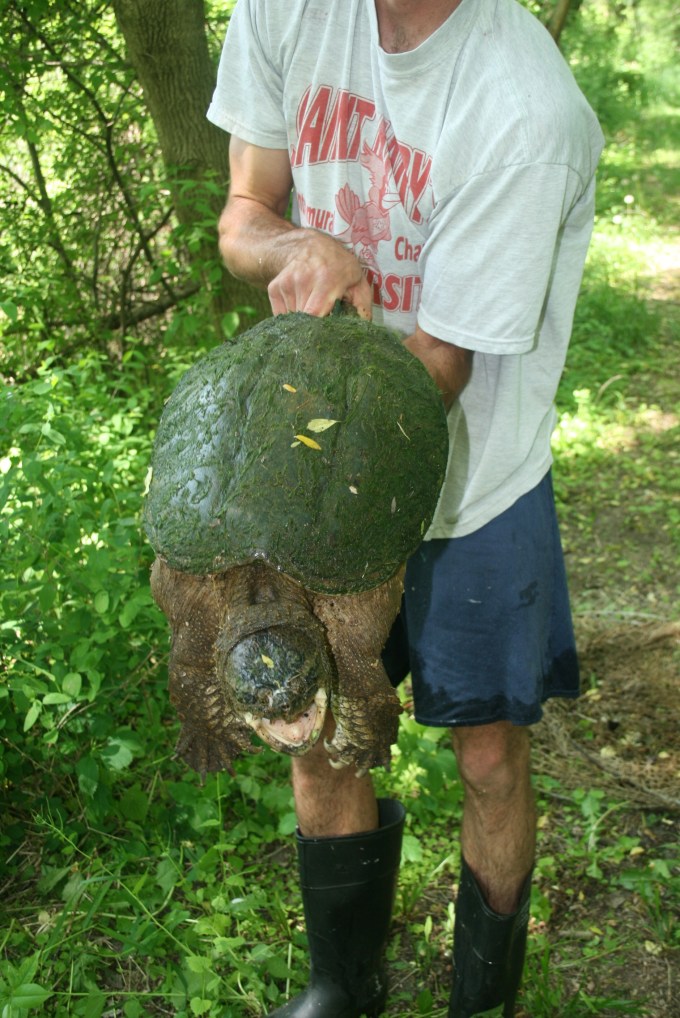
Today’s trapping was very successful. I had placed 3 traps on the pond yesterday afternoon and traps #2 and #3 contained 1 snapping turtle and 2 painted turtles each! All turtle species are identified and have their top shell (carapace) measured. Before releasing they have a notch filed into their shell to mark that they have been previously captured. This does not hurt the turtle in any way

IMG_2551
Safely holding a snapping turtle by the tail and underside (plastron)

The tricky part is extracting snapping turtles. Their claws are very big (used for burrowing into pond sediment) and their name is an understatement to their biting power. Their neck can reach remarkably far side to side and even to the top back side of their shell. WI has 11 species of turtle with one of those being the land dwelling box turtle. Besides the snapping and painted turtles that were caught, only 3 other species would be anticipated to possibly dwell on the Schoofs Preserve: spiny soft-shell turtle, eastern musk turtle, and blanding’s turtle. Please contact me if interested in helping with or learning more about the monitoring projects. The bird survey of the preserve will begin in June.

Nature Club at St. Gabriel School

IMG_2468

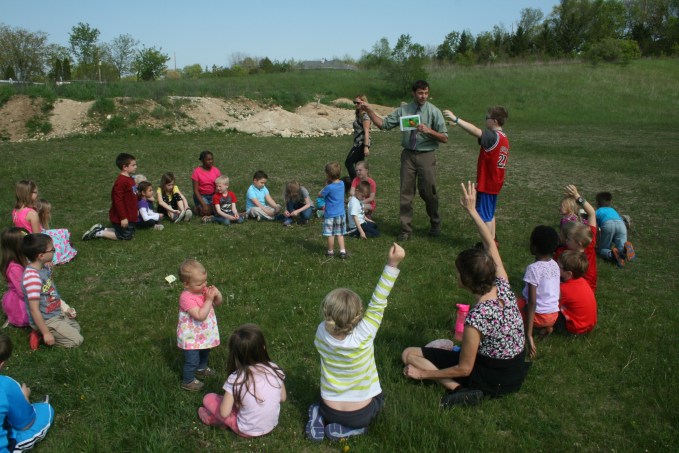
Laudato Si’ Project’s Joe Meyer helps teach nature club at St. Gabriel Catholic School in Hubertus, WI. Nature club is an after school program for kindergarten through fifth grade and attempts to give outdoor, experiential nature encounters to students. Over 25 students from St. Gabriel’s came out on a sunny day to learn about habitats and nests.

We started by discussing different habitats and nests for a whole variety of creatures. Students got to touch and pass around a lot of examples. Then we talked about the different bird nests and materials they use in nest construction. Students were thrilled to be able to go out and build their own nests. We ended by playing a game in which students (birds) had to forage and bring the food back to their young in the nest while attempting to not get eaten by the predator. Nature club will resume again in the Fall.

Bird Banding with the Urban Ecology Center

IMG_2436
Matt Howenwalter gets a hands-on encounter with a red-winged blackbird. Also pictured is Alex Teske and Jonathon Wallace

Laudato Si’ Project joined Jenn Callaghan of the Urban Ecology Center at Riverside Park, Milwaukee for their spring migratory bird banding. The purpose of migratory bird banding is to collect data on birds that may be only passing through WI on their way to breeding grounds in Canada. Some of the birds caught at these banding stations are also resident birds and important information like breeding health and age is gathered.

The actual band that is placed on the birds is a unique 9-digit number that will be entered into a federal database. If that bird is caught or found anywhere else in the world, it can be traced back the original banding station. This information is crucial for understanding migratory routes, health, and age structure of bird populations.

IMG_2419
Putting a band on a red-winged blackbird

The birds are captured using a “mist net” which is a fine black net that is barely visible to the birds. These nets are placed in strategic locations near the banding station and capture birds that are flying from place to place. The bander’s will extract the birds carefully and carry them back to the banding station to collect all the data. After they are banded, they are released.

Woodland Restoration at Schoenstatt Retreat Center

Saturday was a great day for woodland restoration. The temperatures were cool (ok cold and sleeting) but let’s look on the bright side, no mosquitos yet. Quentin Maxwell, Ernie Meyer, and Joe Meyer started cutting buckthorn early Saturday morning at the Schoenstatt Retreat Center in Waukesha. The sister’s own several hundred acres of beautiful rolling hills including agricultural land, marshes, and woodlands.

The woodland we worked in is full of a variety of hardwood tree species like oak, hickory, and cherry. There are many different tree sizes in the woodland including multiple 200+ year-old oaks and hickories. The invasive European buckthorn was interspersed throughout the woodland and removing it allows light to reach the native wildflowers and the next generation of hardwood saplings.

After cutting for several hours, we were joined MUHS students Owen Byrne, Sebastian Pruhs, Max Neimon, and Jacob Baisden. These guys did a great job stacking the buckthorn into piles that will be burned later in the year but for now serve as a haven for wildlife.


Ernie Meyer donated an Aldo Leopold style bench to the sisters that we placed amongst a spectacular Oak Opening. We also began to make a woodland trail that will be accessible to people on retreat who want to meander through the gorgeous woodland. Laudato Si’ Project looks forward to continuing this and many other projects on the Schoenstatt Retreat Center property including more bluebird nest boxes and prairie plantings. After a hard but satisfying few hours of work, the sisters had a nice hot lunch waiting for us in the retreat center to thank us for our work.

Johnson Controls and Sustainability

johnsoncontrols_main
Glendale, WI

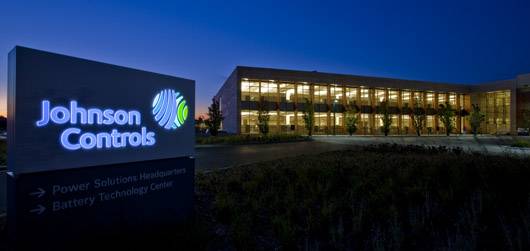
Johnson Controls is a well known WI company that deals with everything from batteries to automated HVAC systems. They employ over 180,000 workers worldwide but it is their campus in Glendale that I want to focus on.

Six of us from MUHS went to visit and tour their buildings to see the various sustainability practices they showcase. Although some of their buildings are from the 1960’s, they have earned LEED Platinum certification on 2 old and 2 new buildings on their campus. If you are unfamiliar, LEED ranking deals with strict sustainability criteria of energy, water, waste, and material use and consumption.

Above are two interesting examples of sustainability. Johnson Controls has solar photovoltaic’s on the ground, rooftop, and for solar hot water. They also do quite a bit for water issues. Above is a picture of the permeable pavers in the parking lot. Water drains through the pavers instead of into a storm drain contributing to large storm overflow discharges by MMSD. The water that percolates through the pavers is instead stored in basins that is used for part of a gray-water system to flush toilets and also to fill water features on site.

58a5c2a0452acf49b388ec0527d8b526
The water retention system and native plantings on site


Early May in WI


morels
Edible Morel Mushrooms

Early May in WI brings new life to our region. Even with some nights dipping low into the 30’s, life is springing up everywhere- you just need to what to look for and where to look. Pictured above are some Morel mushrooms. If you are unfamiliar, Morel mushrooms drive thousands of Wisconsinites into the woods in search of these delicacies, which can fetch a hefty price if you want to sell them. These small mushrooms range in size from 1 to 8 inches and continue to evade our ability to cultivate them. Thus you need to search for them in the wild. Your best bet is to look near dead elm trees but of course, it is not only correct identification of trees that you need to be concerned with. Mushroom ID always requires caution.  You can read more about finding, identification, and cooking of morels Here.

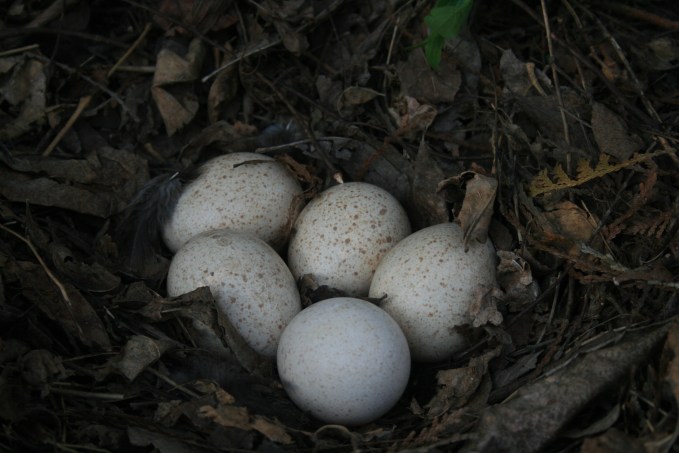
The great thing is all the other unexpected things you see and find while out in the woods for looking for Morels. Possibly a deer shed antler from February, warblers migrating through, or even a turkey nest like this one below. My family and I found this nest while on our Morel escapades (not to mention 3 dozen morel mushrooms!!)

Turkey nest
Wild Turkey Nest

And we can’t forget our spring ephemeral flowers. These beauties carpet our forests and do most of their life cycle before the tree leaves come out on the trees and shade them out. Maybe for Mother’s Day this year take your Mom out for a walk through one of Wisconsin’s beautiful forested parks or preserves, you never know what you are going to find.

Growing Power

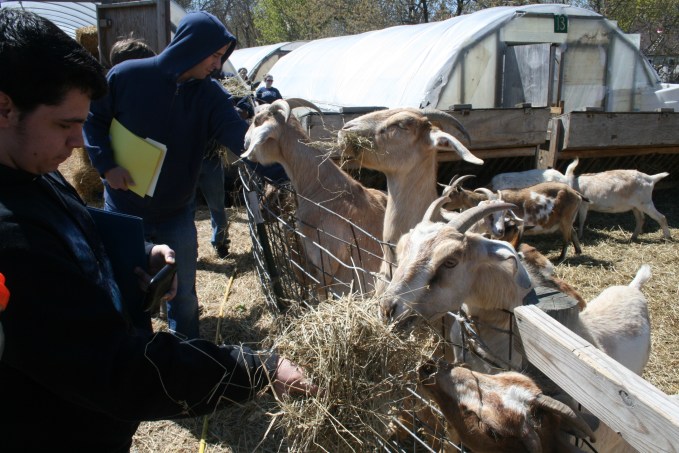
This weekend we were privileged to be able to tour Growing Power, which is an urban gardening organization based on the north side of Milwaukee. In fact, they are the only site in Milwaukee County still zoned for agriculture. In this day and age of not knowing where your food comes from, students saw first hand the growing process of not only leafy greens, but also, perch, tilapia, goats, and chickens. Growing Power is nationally known and replicated as a way to ensure all people, even those in urban, minority neighborhoods, have access to nutritious vegetables.

IMG_2190
The “sifter” which is what sifts the compost soil.


Growing Power sells many vegetables to Pick n’ Save and Sendiks but especially interesting is their aquaponic system to raise leafy greens and perch/tilapia. See below how water from the fish system is run up above through watercress trays fertilizing the plants with the fish waste. These fish are grown to adulthood and sold to various restaurants including Lakefront Brewery. Growing Power makes all their own soil through composting and are experts in growing vertically. It was truly amazing to see how much sustainable, organic production can take place on 2 city acres.

See more at Growing Power’s Website

IMG_2203
Feeding the milking goats

Relevant Radio Interview and River Clean-up

Earth week was a busy week to say the least. The culmination was on Earth Day, April 22nd, Joe Meyer of the Laudato Si’ Project was interviewed on Relevant Radio’s Morning Air. The interview consisted of not only explaining how to Live Laudato Si’ but also describing the various parish and school ministries of the Laudato Si’ Project. We have been blessed to have been on Relevant Radio twice already in 2016 and thank them for their great work. If you missed the interview, Listen Here

Laudato Si’ Project also partnered with Milwaukee RiverKeeper on Saturday to clean-up rivers in the Milwaukee River Watershed. We had groups at 3 locations in Southeast WI, joining 100’s of other volunteers to clean our waters. We all had a blast and thank everyone for their hard work and for Living Laudato Si’.

Green Alliance

5987-environment

Waukesha County holds a great multitude of state treasures: small towns, lake country, and the southern Kettle Moraine State Forest. The Laudato Si’ Project is proud to be part of the formation of a Green Alliance in Waukesha County. The Green Alliance will work toward moving Waukesha County in a sustainable direction. The Green Alliance is made up of several dozen organizations, schools, church groups, municipalities, and civic leaders. The Green Alliance looks to promote sustainable environmental practices within schools, businesses, and towns in Waukesha County. If you are interested in taking part in the Green Alliance, the next forum meeting is on May 20th at 6:30pm in Oconomowoc, WI.

“A great cultural, spiritual and educational challenge stands before us, and it will demand that we set out on the long path of renewal.”                                   

–  Pope Francis Laudato Si’ 202

Parish and School Partnership

Unknown

IMG_3450
St. Gabriel Elementary Students at Nature Club

We are happy to share that the Laudato Si’ Project has partnered with St Gabriel Parish and School in Hubertus, WI. We will be helping plan and teach St. Gabriel’s after-school program called “nature club” for kindergarten through fifth grade. It is a great way for students to experientially learn all about the wonders of nature and get them outside. The next nature club program will be in May. We are also starting a Laudato Si’ Project Team at the Parish. Any parishioners interested in learning more about the encyclical and working to better the parish and school through sustainability and education projects can join.  Learn more about Parish and School Partnerships Here.


Prairie Burning Begins

IMG_2039.jpg

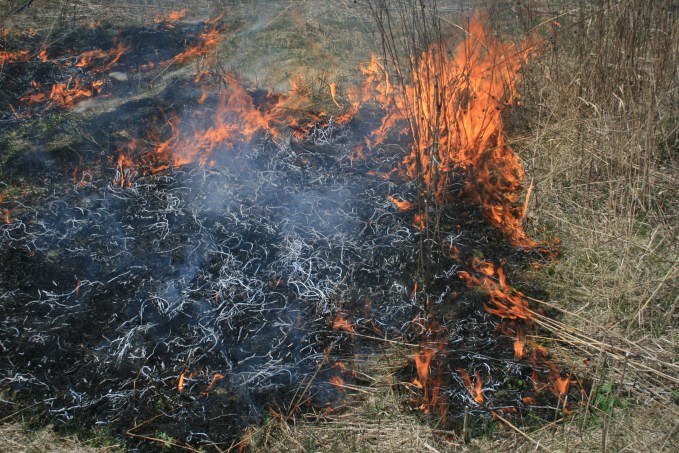
Today was the first day of the spring prairie burning, Prairies are ecosystem types dependent on burning to renew the nutrients and stop primary succession. Another added benefit to burning at this time of year is that it knocks back the cool season, non-native grasses that often compete in prairies. This is a small 1-acre section on the Meyer property. The now black earth will warm quickly and cause our native grasses and wildflowers to wake up. Prairie fires were common in southern WI because of Native Americans starting the prairies and oak savannah’s on fire to attract wild game to the fresh grass shoots. Lighting fires were more common in northern WI. Prairie plants have extraordinary root systems and are unharmed by fire. Laudato Si’ Project will be burning approximately 8 acres this spring.

IMG_2041IMG_2044

Mid Kettle Moraine Partners Get a New Look

mkmp2b

The Mid Kettle Moraine Partners is a collective impact partnership of over 2 dozen organizations ranging from land trusts, townships, county supervisors, regional planners, and outreach organizations like Laudato Si’ Project. The Goal of the MKMP is to bring greater awareness to the importance of the Mid Kettle Moraine ecologically and economically. In the 1930’s to the 1960’s, a lot of land was set aside for conservation and recreation that resulted in the beautiful Southern and Northern Kettle Moraines (much of which is State Forest or State Natural Areas open for public use). In the 1960’s the funding dried up and land acquisition ceased resulting in a 40 miles stretch left unprotected- The Mid Kettle Moraine. Conservation will ensure that the Mid Kettle Moraine stays protected for water quality, recreational opportunities, educational use, habitat, and because it is the right thing to do!

Many groups at the meeting do a lot of conservation work in the Mid Kettle Moraine. For example, Laudato Si’ Project uses lands in the Mid Kettle Moraine for educational, stewardship, and recreational projects. We are even helping plan and plant an 8 acre prairie in the Mid Kettle Moraine this summer to increase pollinator habitat and water quality of the Oconomowoc River.

As far as the new look, the Mid Kettle Moraine Partners now has a logo. This is thanks to Laudato Si’ Project graphic designer and artist, Andrea Meyer (wife of director Joe Meyer). The MKMP has also launched a new website to help people discover and explore the Mid Kettle Moraine. Along with this is the completion of a NEW map which will show all the public lands, Ice Age Trail, preserves, canoe/kayak routes, and scenic drives in the Mid Kettle Moraine. When these maps are printed in the next month or so I will mail them out to Laudato Si’ Project members. The efforts of Laudato Si’ Project and the MKMP will hopefully bring about a green future for this “Gift of God and the Glaciers”

Click Here to see the Mid Kettle Moraine Partners new website.

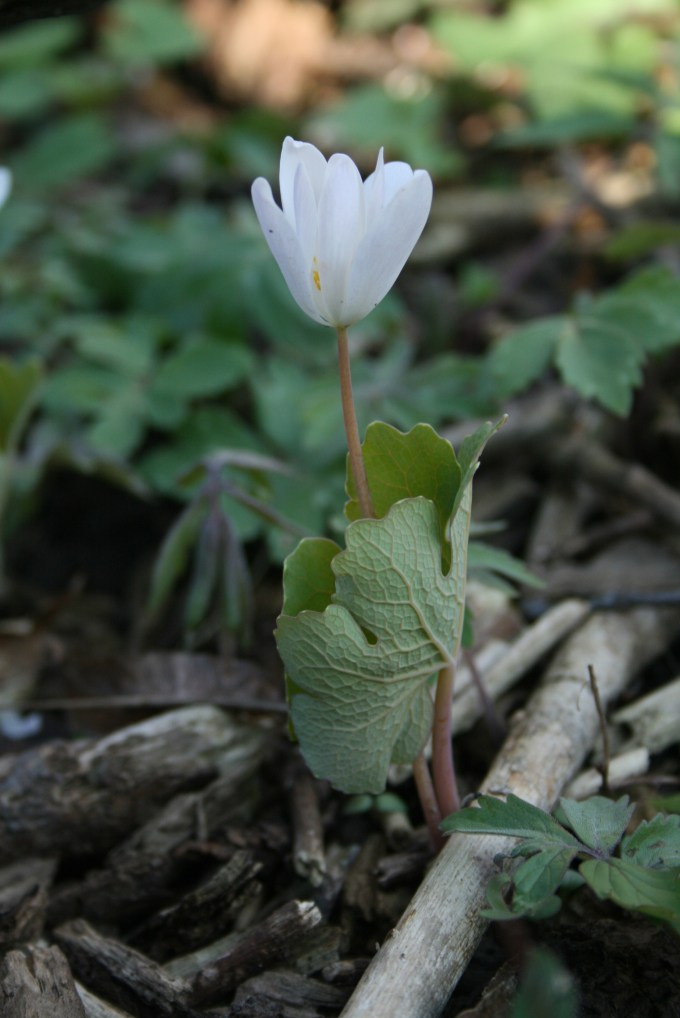
Bloodroot2
Bloodroot, a spring ephemeral flower

Urban Ecology Center at Washington Park

Unknown
IMG_2015
Davita of the UEC explains some their outreach programs

Today, the Laudato Si’ Project visited the Urban Ecology Center at Washington Park, in Milwaukee. Marquette University High School students learned about the history and mission of the Urban Ecology Centers and helped with several projects. The Urban Ecology Center first began on the East Side of Milwaukee at Riverside Park. Concerned citizens organized after proposed building plans were brought forward for Riverside Park. What was discovered through the years was that if an urban park is kept in good condition, facilities are present for neighbors to use, and educational programs are established with local schools- crime and vandalism decrease in the park. Couple this with recreational opportunities for visitors and benefits to wildlife and water quality through restoration- and you have created an urban ecological gem.

The Urban Ecology Center at Washington Park has grown tremendously in the last few years. Within the 125 acres of Washington Park, there is Lagoon with restored shoreline (the lagoon is a remnant of the old Milwaukee Zoo), woodlands in the process of restoration planting, an ephemeral pond, prairie plantings and rain gardens, and even an orchard.

Our initial plans for doing some prairie planting and garlic mustard removal were changed due to the snow and below freezing temperatures. We instead swapped out all their winter rental equipment, snowshoes and cross-country skis, with their summer gear of kayak and canoe paddles. A few students built chair dollies in their wood shop, and others took out the remaining maple syrup spiles and collection bags from their Sugar Maple trees.

The Urban Ecology Centers at Riverside Park , Washington Park, and Menominee Valley (next to Miller Park), are hosting a wide array of Earth Day volunteer opportunities on the weekend of Earth Day, April 22nd. The Laudato Si’ Project will also be visting the Urban Ecology Center at Riverside Park this Spring to learn about and assist with the migratory bird banding.

Laudato Si Project Partnerships

The Laudato Si’ Project is proud to announce two new partnerships- St. Bruno’s Parish and School in Dousman and The Schoenstatt Sisters Retreat Center in Waukesha.

St. Bruno’s Parish has a vibrant “Green Team” that has been Living Laudato Si’ in various ways. They have dedicated members that have conducted Laudato Si’ studies, had an energy audit done for the parish, helped create a school garden, and they even hold educational presentations for parishioners. As the Laudato Si’ Project continues its ministry in parishes and schools, we are happy to have the St. Bruno Green Team as a model of what can be done by dedicated parishioners.

Check out our new Parish and School Partnership page on our website to get something started at YOUR Parish or School.

The Schoenstatt Retreat Center  is run by the Schoenstatt Sisters of Mary. They have a beautiful campus, a great new building, and they host local, state, and international visitors. An integral part of a retreat at Schoenstatt is walking around the several hundred acre property of the retreat center. The Laudato Si’ Project has partnered with the Sisters to assist them in increasing the ecological value of the land while improving the experience of a retreatant. Some of the present and future projects include: oak savannah restoration, trail creation and maintenance, bluebird nest box installation, educational signage, prairie plantings, and conservation planning for the lands now in agriculture.

“The universe unfolds in God, who fills it completely. Hence, there is a mystical meaning to be found in a leaf, in a mountain trail, in a dewdrop, in a poor person’s face.” Laudato Si’ (223)

Oak Savannah Restoration with the Audubon Society

File_005
Milwaukee Audubon Society and MUHS students working at the Kolterman Prairie

The first week of April brought snow and strong winds to southern WI but that did not keep the Laudato Si’ Project from working on the Milwaukee Audubon Society’s Kolterman Prairie near Horizon Marsh, WI. Members from the Audubon Society and Marquette University High School met on Saturday to learn about the ecology of this unique property, help restore some of its Oak Savannah, and explore the geology of the Niagra Escarpment.

WGNHS-Early-Vegetation-of-Wisconsin-Map-1965-M035
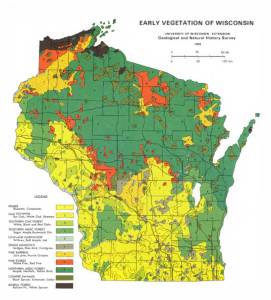
Native ecosystems of WI- Oak Savannah is shown in yellow

Less than 1% of WI’s original prairie remains and much of southern WI was a mix of prairie and Oak Savannah (scattered trees with prairie underneath). As you head North and East through WI, you move through the Maple-Basswood Forests of the Mid and Northern Kettle Moraine and finally up to the mixed forests of the “Northwoods”. The southern prairies and savannah’s were kept from succession and subsequent invasion of forest species through fire, mostly started by Native Americans to bolster hunting grounds. The Kolterman property supports prairie, savannah, woodland, and even a creek. This diversity of habitats makes it a valuable site for a multitude of bird species and is the major reason why it is preserved today. Volunteers removed, not just invasive species, but tree species not typically found in a savannah with and emphasis on saving Mature Oak and Hickory trees. Jim Urinak of the Milwaukee Audubon Society, taught students about the ecological workings of these ecotypes and showed them how to help with a savannah restoration on the property.
 

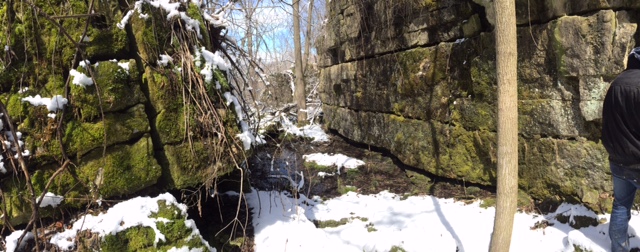
To finish the afternoon, students were able to explore a unique geologic feature called the Niagara Escarpment. The Niagara Escarpment is a 1000 mile long rock formation that is made of the same rock as Niagara Falls. Read more about it HERE

IMG_1445
Rocks of the Niagara Escarpment

Milwaukee Audubon Society Information 

Icy Beauty in Washington County, WI

IMG_1735

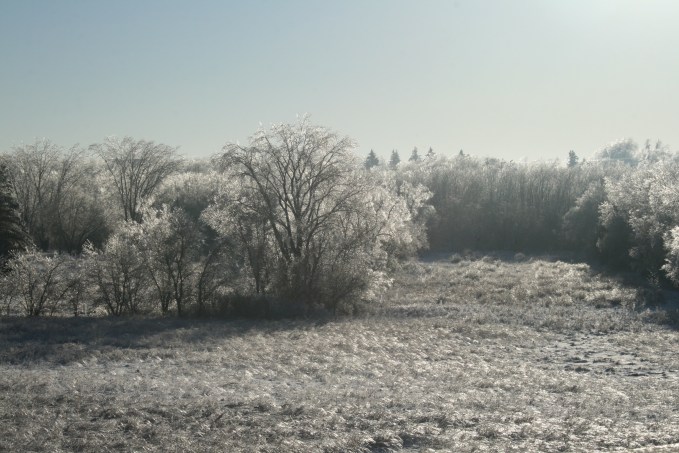
On Holy Thursday, the rain, ice and sleet hit much of WI very hard. Power outages and traffic accidents can make these events very frustrating. The other result of this, though, is icy natural beauty that only lasts a day or so. Couple these spectacular views with the sounds of red-winged blackbirds, eastern bluebirds, and song sparrows for a unique spring experience. This may be the last look at nature like this until late next fall. Enjoy

This slideshow requires JavaScript.

Bluebird Nest Boxes

IMG_1708
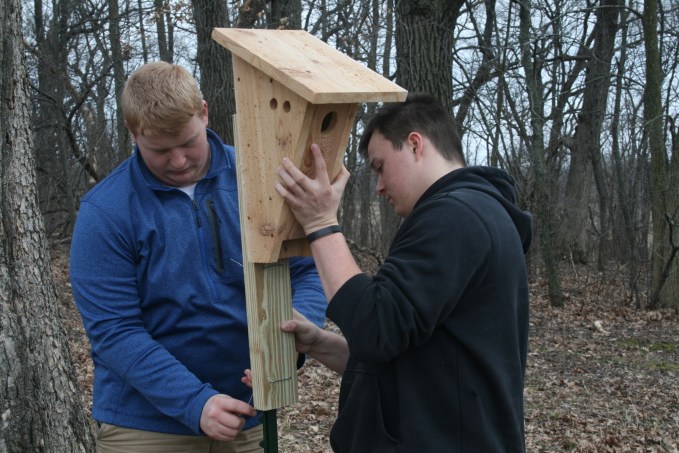
Students install a bluebird nest box at a Catholic Retreat Center

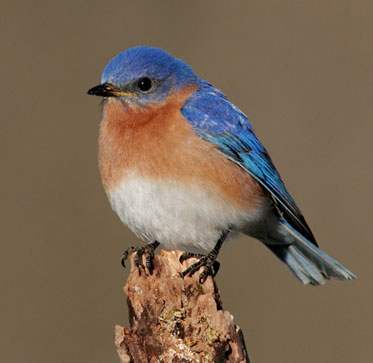
Seeing bluebirds arrive in Spring gives great hope to the warmer weather soon to be here. Male bluebirds have to be one of the most beautiful and most loved birds in the United States. They are cavity nesters, depending on big trees to supply them with ample nest choices. Pre-European settlement, the prairie and oak-savannah of southern WI gave them a plethora of cavity sites. With increased pressure from aggressive invasive species, like European Starlings and House Sparrows, loss of tree nesting cavity sites, coupled with some ice storms in their southern United States wintering grounds- populations decreased by nearly 90% from the 1930’s to the 1980’s!

wwbluebirdleft
Male Eastern Bluebird

Thanks to the efforts of the Bluebird Restoration Association of WI, bluebird populations have increased dramatically in their historically range. Education and especially construction of bluebird nestboxes, gave this awesome bird the advantage it needed. Patrick Donohue and Jonathon Wallace have built bluebird nest boxes for the Laudato Si’ Project and are pictured above helping to install them on a beautiful southern WI property. Placing of bluebird nest boxes is an easy way for us to ensure this species has a place on our WI landscape forever.  To learn more about bluebirds and hear their call Click Here.

GPS Park Mapping and Geocaching

IMG_1638
Park Rangers, MUHS Students, and WI Geocaching Association

Meeting us at the Pike Lake Unit of the Mid-Kettle Moraine was Park Ranger Rob Wessberg along with three members of the WI Geocaching Association. Over a dozen students from Marquette University High School came to help map the trails of the State Park using GPS units. These new GPS maps would be extremely accurate and used for visitors and park management.

PIke Lake
Park Rangers, MUHS Students, and WI Geocaching Association

Students were instructed on how to use GPS units and were divided into groups to map the over 12 miles of trail systems in the park. They also took coordinates at waypoints like benches, intersections, and restrooms. Adding to the fun was the WI Geocaching Association. If you are unfamiliar, geocaching is a recreational sport were you search for “caches” (usually small boxes with a toy or prize inside) using GPS coordinates. There are millions of these “caches” around the World. Students were taught some of the history, fun, and how to of Geocaching.

IMG_5185
Finding their first Geocache

Pike Lake is a diverse park and students were able to see not only the varied geologic features like kames, kettles, and moraines- but also habitats like Maple forests, prairies, and wetlands. After about 3 hours of hiking, geocaching, and point marking, we had finished. The Rangers at the park will be inputing the data on their mapping software and out comes a new and very accurate map of the trails at Pike Lake. We really enjoyed our time and thanks to the staff at Pike Lake and the WI Geocaching Association for making it so wonderful. We look forward to working with both groups on future projects.

The Woodcock Skydance

AmericanWoodcock-Vyn_080407_0014
American Woodcock

On these spring evenings, just before dark you will begin to hear the “peenting” call of the male Amercian Woodcock. Without knowing this, you might write it off as a silly insect buzz but what follows is truly a spectacle of nature. The male continues his “peenting” call for several minutes before taking flight. Then begins a circular flight into the sky, during which you will hear a high pitch noise as they fly made by the sound of their wings. They continue these concentric circles until they are several hundred feet in the air and then continue with their “falling leaf” display. This consists of erratically falling through the air while making high pitch vocal tweets. Their sky dance ends with them swooping silently to the ground where they originally took off and continue their “peenting.” This mating display continues well into the night and sometimes in the morning as well.

I remember first learning of this natural feat after reading Aldo Leopold’s account of it in a chapter of The Sand County Almanac. Sure enough, a buddy showed me a local park where this was taking place near my house where I grew up. My whole family would venture to experience this little known ritual happening nightly. Fast forward several decades, and I am blessed to be able to hear and see nearly a dozen of these birds displaying on my property with my wife, son, and daughter with me to experience it. When you are plugged into phenology you will begin to appreciate these small but amazing gifts of nature- as a result, your view and attitude towards it changes.

To see a video, audio, or more information click here 

images

Maple Syrup Demonstration for HH Ski Club Spring Picnic

IMG_1627
Explaining the tapping of Sugar Maple Trees

Heiliger Huegel Ski Club had their spring picnic today. The temperature was in the mid thirties and 2 inches of snow fell the night before (“spring picnic”??) Despite it not feeling like spring, it is great maple syruping weather. About 20 adults and kids came to learn about the process of tapping and making maple syrup. The highlight of many was tasting maple sap, which is about 2% sugar, and then getting a taste of the finished syrup at 66% sugar.

I wanted to stress that anyone can make their own syrup, even if they only have one maple tree and live in the city. Love Live the Sugar Maple.

If you want more information about tapping maple trees, equipment, and making syrup  Click Here

Living Laudato Si’- Relevant Radio’s Interview

RR_logo

This morning, Thursday March 3rd, Relevant Radio’s “Morning Air” show host, John Harper, interviewed the Laudato Si’ Project about how it is working to further the message in the Pope’s encyclical. Although the Laudato Si’ Project works mostly in Southeast Wisconsin, its mission of reconnecting people to the natural world is universal. The call is especially pertinent to our Catholic Schools and Parishes to work toward this goal and “setting out on the long path of renewal.-Pope Francis”

You can listen to the 15 minute audio interview on our website Click Here

Cedarburg Bog State Natural Area

IMG_1583
MUHS students on Long Lake in the Cedarburg Bog SNA

MUHS students spent their Sunday afternoon exploring the beautiful Cedarburg Bog State Natural Area. Tom Hayssen, a MUHS parent and landowner in the bog, led us through the UWM field station’s boardwalk and did a wonderful job explaining the formation and workings of this special place. We were also joined by a few other adult friends from Heiliger Huegel Ski Club who were curious to see and explore this Wisconsin gem. As a result of a bog being a bog, it is best seen in its entirety when it is frozen over. There was a few inches of meltwater on top of the ice and we followed the trail made by the Friends of Cedarburg Bog all the way to Long Lake (pictured above). Thankfully the temperatures were not any warmer as there would have been much more breaking through the ice into knee deep muck. The path weaved through thickets of tamarack and stunted white cedar and beautiful openings of sedge hummocks and cattails. We were able to see our fair share of the insect eating pitcher plants that digest bugs that fall into their water filled reservoir’s (pictured below). We also came across a Wood Frog that was overwintering in the ice. These frogs have the ability to freeze solid and thaw out in spring to go about their business (pictured below).

IMG_1574
MUHS students exploring the Cedarburg Bog


Maple Syrup Season is Here

IMG_9216
My son Nathaniel putting up the sap bucket

Saturday was a beautiful sunny day in the 40’s. In February that means one thing, maple syrup time. My son Nathaniel and I tapped around a dozen sugar maple trees and immediately upon drilling the hole for the spile, sap was flowing. In my experience, having days around forty and sunny with nights below freezing produces the best flow. When temperatures reach high forties and fifty the flow actually stops. Every year we tap the trees around this time but usually we are ahead of any flowing. Saturday already yielded six gallons of sap, not a bad start. Other signs of spring were heard and seen by us including chickadees doing their “cheeseburger” song, Canada geese heading north, and even a sandhill crane flying by. Lastly, in the evening 5 red-winged blackbirds flew by.

Mid-Kettle Moraine Beauty

IMG_1484
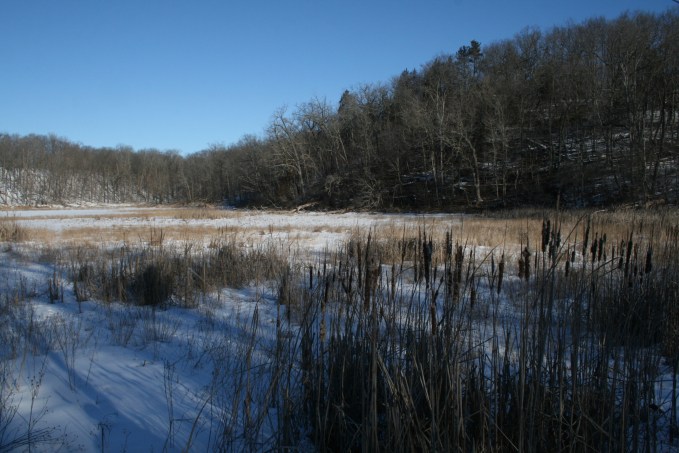
Kettle Wetland

I had the privilege today to walk an incredible property in the Mid-Kettle Moraine. The landowners wanted me to do a habitat assessment. Despite single digit temperatures, the sun was shining and it was amazing. You name a glacial feature in the Mid-Kettle Moraine and this property has it. The varying aquatic and upland habitats create a home to a diversity of wildlife.

IMG_1496
Glacial Esker


January 31st Adventures

January 31st was a big day for outdoor enthusiasts in the Mid-Kettle Moraine. The Heiliger Huegel Ski Club hosted the 2nd annual Langlauf Cross Country Ski Race. The race consists of a 5k and 10k race for both skate and traditional skiers. The course uses ski trails on both the HH Ski Club land and the neighboring Schoofs Preserve. The Schoofs Preserve is a 51 acre public preserve owned by the Ozaukee Washington Land Trust (I do much of the trail upkeep on the preserve).We were busy in the morning getting the trail routes marked and the weather was quickly deteriorating into rain. That did not stop the 50+ participants from having a good time. Later that afternoon, I brought a group of 7 students from MUHS environmental science classes and the ESO homeroom to explore the preserve on snowshoes. After a 2 hour hike exploring the Schoofs Preserve we returned to HH for a nice fire and smores at their chalet fire. These are the sort of outings that the Laudato Si’ Project is happy to help with.