The Snowshoe Priest!

Trekking the Wintry North Woods with Venerable Bishop Baraga
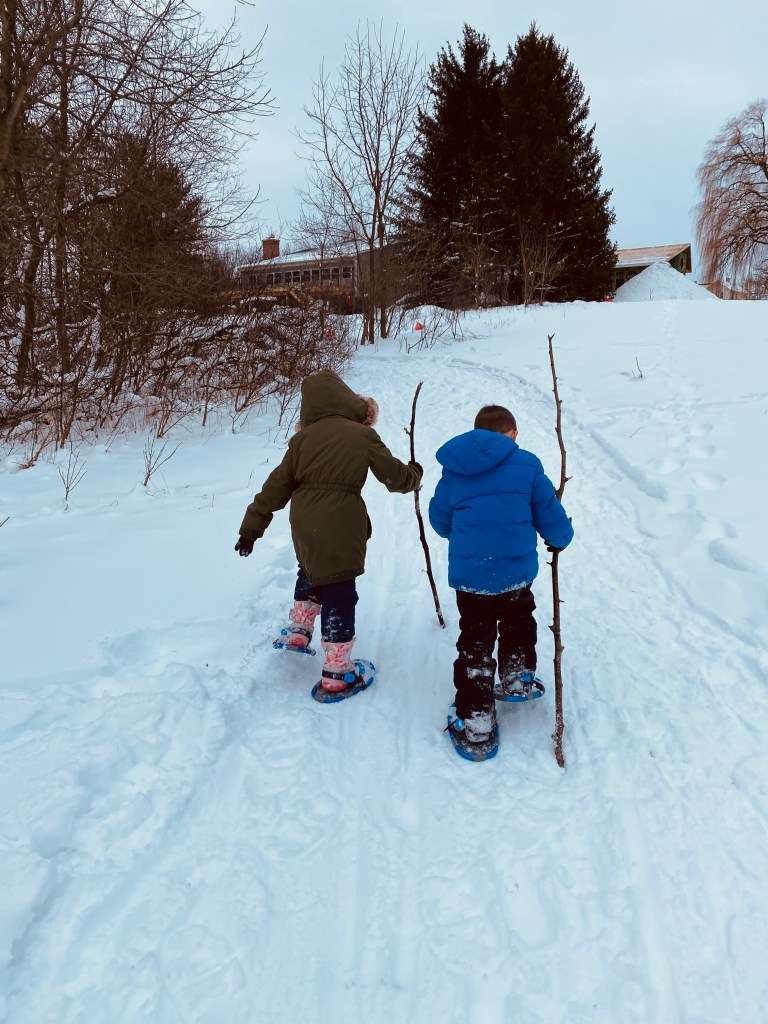
The snow glistens and glimmers as the sunshine sparkles and dances off of the soft drifting banks. The snow is pressed down in hushed crunches, leaving large, shallow imprints like oblong saucers in a trail behind the winter wanderer. This peaceful scene is familiar to snowshoers, those who strap contraptions shaped like beaver tails to the bottom of their boots making their feet big like lynx paws. The large surface area (of both snowshoes and lynx paws alike) distributes weight, allowing the snow trekker to float on top of the first few inches of the deep snow. 

Snowshoes have been around for thousands of years and come in  many different shapes, styles, and materials. From the lightweight plastic and aluminum ones you can find today, to the rawhide and white ash ones that have been made for centuries by the Ojibwe, people have constantly been finding ways to adapt to the influx of snow that slows down winter travel. 
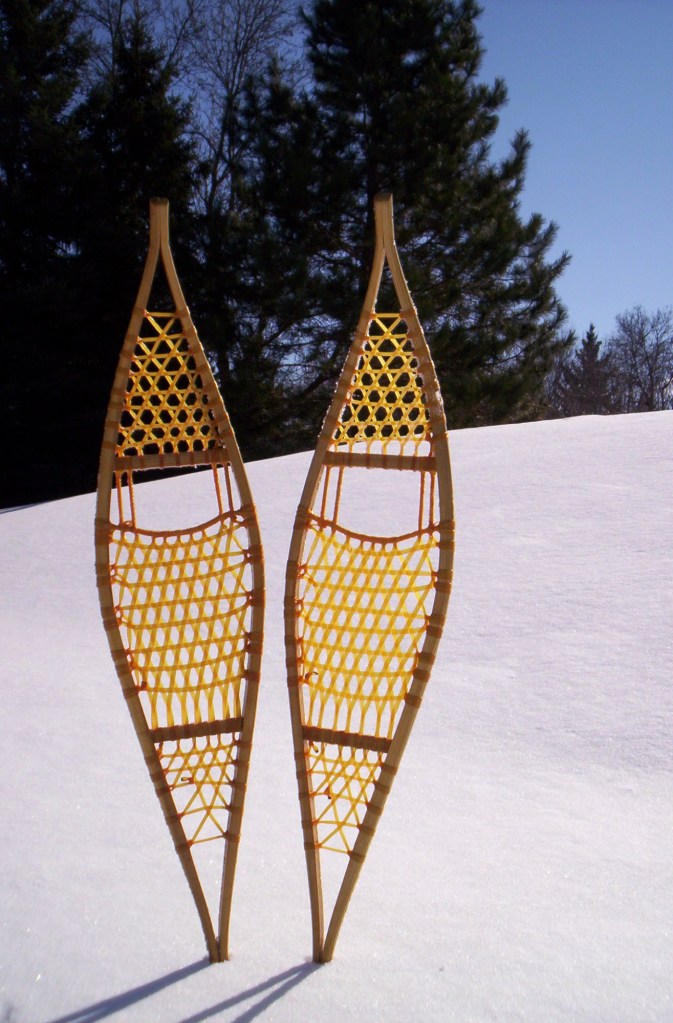
Left: Traditional Ojibwe Snowshoes made of White Ash and Rawhide. The pointed tips help to break through icy, crusty snow and avoid snagging in brush.

Right: Modern lightweight snowshoe models available for use at the CEC.

For those who have experienced deep snow without snowshoes, it doesn’t take long to tire of “postholing”- the exhausting practice of schlepping your legs out of the deep snow, hoisting them up, just to step forward and sink back down and repeat the whole process over again. While it is much easier with snowshoes, traversing any trails in winter is a workout regardless! 

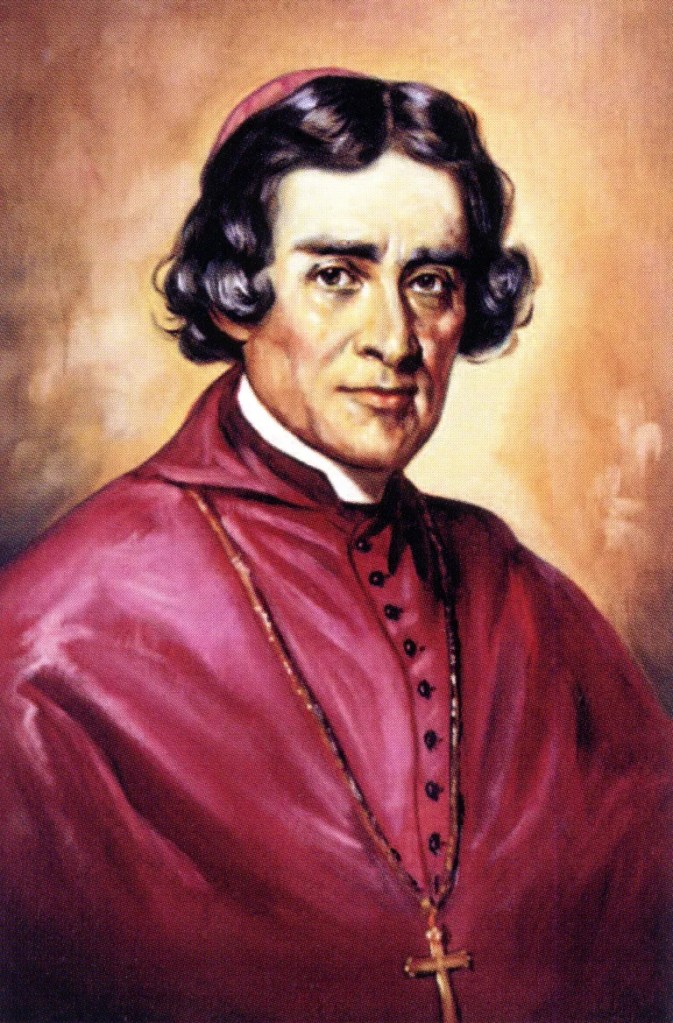
It puts into perspective the incredible journeys that Bishop Frederic Baraga made in the upper peninsula of Michigan as a priest and bishop in the mid1800s. Originally from Slovenia, Father Baraga was born on June 29, 1797. A bright young man, Fredric learned many languages including German, Slovenian, French, and Latin. He became a lawyer after studying at the University of Vienna, but felt the call to the priesthood and joined the seminary shortly thereafter. By age 26, he was ordained Father Baraga and served the people of his diocese for several years. Eventually though, he felt drawn to become a missionary priest and in 1830 set sail for America! 


He began his work in Cincinnati, studying the Ottawa language. His aptitude for linguistics allowed him to pick it up quickly, and in 1831 he was asked to go to an Ottawa Indian mission at L’Arbre Croche (present-day Cross Village, Michigan). He grew very close with the people and came to know them, their way of life, and language in a deep way. In 1837, he published Otawa Anamie-Misinaigan, the first book written in the Ottawa language, which included a Catholic catechism and prayer book.

His ministry wasn’t limited to the Ottawa people though. Fr. Baraga established missions all over the U.P. and had a deep love that is evident in his action and interactions with all of the people he encountered. In his work with the Ojibwe, he not only learned their language, but published pastoral letters both in English and Ojibwe in addition to translating over 100 Catholic Hymns in the Ojibwe language which are still used today. When the government tried to relocate and force the Ojibwe from their land, Fr. Baraga was a staunch advocate for them and worked to ensure they could retain their home. 

Additionally, as the German and Irish immigrants moved to the Upper Peninsula to work in the copper mines, Fr. Baraga would minister to them and their communities. His role as a shepherd to such a large and distant flock meant that he traveled extensively. In the summertime, this was often by foot or canoe, but winter in Michigan’s upper peninsula can bring over 300 inches of snow per year, so snowshoeing was his method of transportation! In February of 1845, it was recorded that Fr. Baraga walked over 600 miles in the course of five weeks! This dedication and grit earned him the nickname “The Snowshoe Priest.”

In 1853, Fr. Baraga was ordained Bishop of Sault Ste. Marie, Michigan, now the diocese of Marquette, Michigan. He worked to bring more priests in to minister to the area, but it was a challenge to find those who could minister to both the Native American and immigrant communities. Not surprisingly, Bishop Baraga’s physical stamina and linguistic aptitude were difficult to match! 

He continued ministering and snowshoeing to his flock late into his sixties. In 1866, when visiting Baltimore for a Bishops conference, he suffered a severe stroke. He immediately asked to go back to Michigan to be home among the people of his flock. His health fluctuated from that point on until he passed away in 1868 among the people he loved and had dedicated his life to.  

Left: The shrine of Bishop Baraga in Michigan’s upper Peninsula.

Middle: Man standing by one of the snowshoes that are used in the Statue of Bishop Baraga at his shrine.

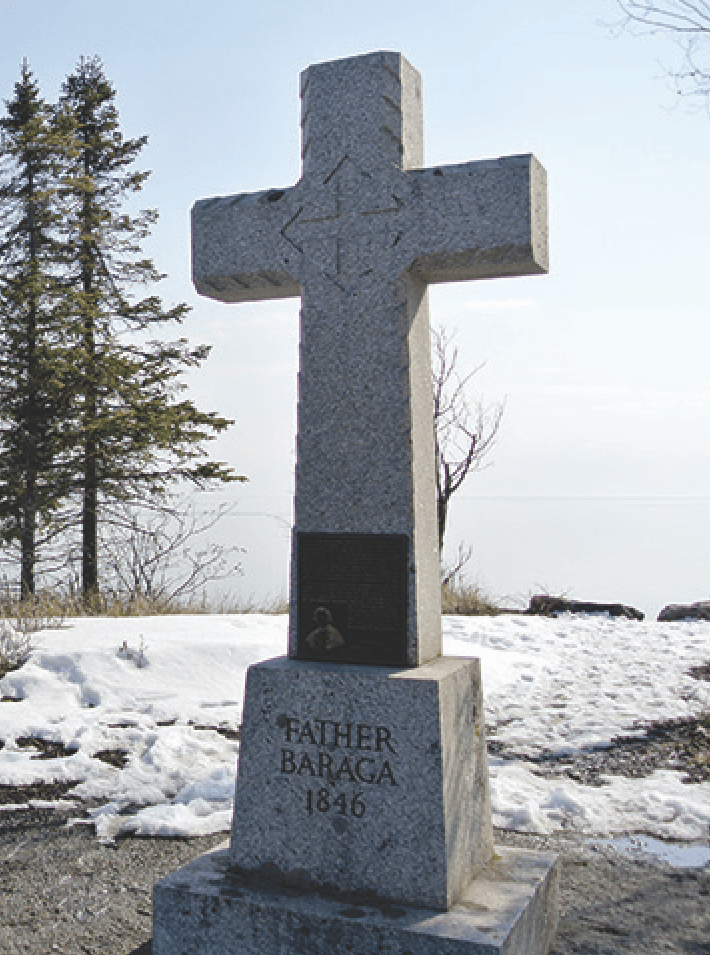
Right: A cross on the shores of Lake Superior in Minnesota honoring Bishop Baraga.

The city of  Marquette, Michigan declared the day of a his funeral a civic day of mourning. Despite the cold temperatures and blizzard like conditions, the church was filled to capacity and then some as people, Catholic and non-Catholic alike, spilled out to honor the man they believed to be a saint in their midst. 

Today you can visit the shrine of Bishop Baraga in L’Anse, MI where a giant copper statue stands of the priest and his trusty pair of snowshoes. On the north shore of Lake Superior, in Minnesota, you will find a Fr. Baraga memorial cross. Whether on the shores of Lake Superior where he ministered or on the trails here at the CEC, call to mind the humble, hardworking, and adventurous life of venerable Bishop Baraga the next time you strap on your snowshoes. Venerable Bishop Baraga…Pray for us! 

Come snowshoe at the CEC! Rentals are free for members or $5/day for non-members. 

A Time of Refinement

It’s that time of year again! The time where the sunlight begins to linger in the golden evening, the breezes carry a hint of warmth, and the ground starts to soften ever so slightly. Spring is definitely making its presence known bit by bit, but no matter what the groundhog tells you, winter isn’t ready to loosen its grip just yet! 

It’s easy to laugh and shake our heads at the craziness of midwest weather: going from cold to warm to cold again, but actually, the natural tug-of-war between winter and spring where the days grow warm and the nights dip back below freezing facilitate the perfect weather for a great sap run!  

Just as we have vascular tissue in our bodies like arteries and veins that carry blood, trees also have vascular tissue! Instead of blood though, their tissues carry sap. Sap is a liquid that is mostly water, but also contains sugar which provides energy for the tree. The tree is in particular need of energy in early spring as it needs to grow new leaves after shedding them in the fall. Sap brings sugar, and sugar brings energy to the emerging buds, and those in turn grow into new leaves which will make sugar via photosynthesis for the next cycle of sap! It’s all one continuous cycle!

But why does the sap flow during these fickle temperature swings? Well, the warmer temperatures in the day create a positive pressure in the tree. The buildup of pressure gets the sap moving so that when there is a hole in the tree, the sap will naturally run out to an area of lower pressure. At night though, as the temperature drops, the tree develops a negative pressure system. This negative pressure forms a natural suction preventing the sap from leaving the tree. Simultaneously, the negative pressure system pulls water down to the tree’s roots where it can help replenish the sap supply. 

This cycle of flowing and slowing, rushing and waiting, will occur in the tree until temperatures remain above freezing. Then, the sap run is over and the tree works to turn those little buds into the broad leaves that will harvest the sun to make sugar for the next year’s supply of sap! 

It’s pretty incredible the way the tree uses its sap in its own closed system, but it’s downright remarkable to see what a gift it can be for us too! Humans have been collecting sap for hundreds of years. Early Native Americans and settlers used tools like wooden spiles and birchbark baskets to harvest the sap, but oftentimes today the tools look a little bit different. 

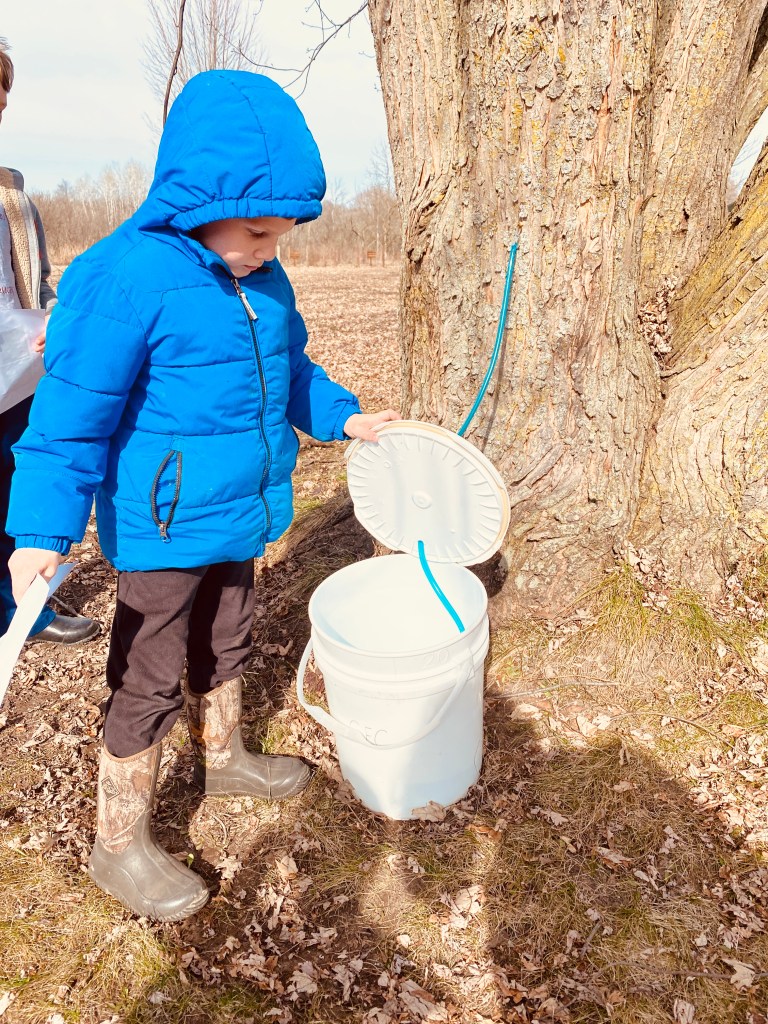
We harvested sap just earlier this week with our Faith Journeys students, and they did a great job! After walking out to the silver maple by the Ecology Yurt, we looked for a spot to tap: fairly low to the ground while not on the same vertical line as previous years taps and hopefully under a branch where there would naturally be good sap flow. We found a spot and used a power drill to make a hole at a slight upward angle, encouraging the flow down through the spile. WHiiiirrr! The students giggled as small curls of sawdust burst out from the drill bit! After that it didn’t take long! Gasps filled the air as sap started to trickle and dribble out of our new hole. We quickly put a spile, a tapered conical spout, into the hole to help funnel the sap into the desired holding container. Students had a great time using the rubber mallet to pound the spile until it was secured snugly in place. After that, we connected the spile to the collection bucket either through hooking the metal bucket directly below the spile, or by threading a small hose from the spile into a bucket that rests on the ground. Finally, the students helped secure lids on the buckets. We aren’t the only ones who like sap! The lids not only keep out debris that could naturally fall into the bucket, but it also keeps out critters like squirrels and bugs who wouldn’t mind helping themselves to the sweet treat! Then it’s time to be patient as the trees drip and drop and spill their sap into the buckets!

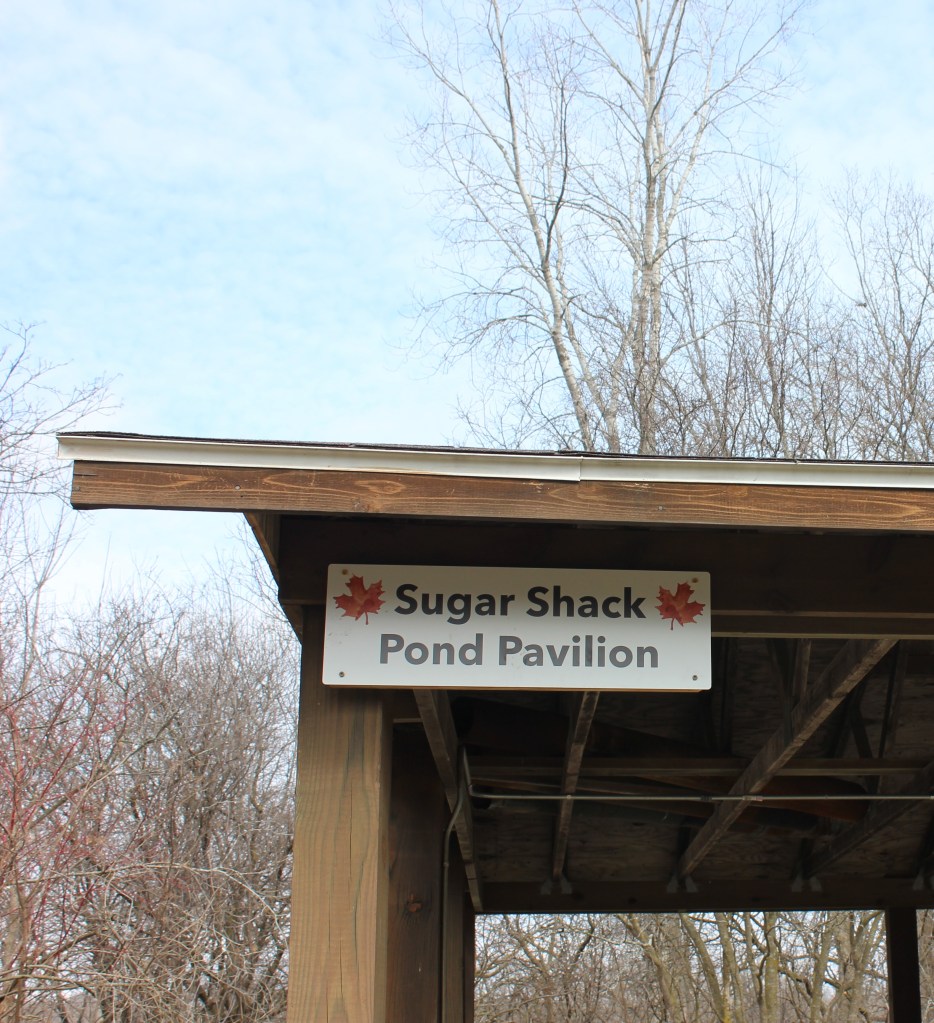
It’s not over yet though, in fact, it’s just the beginning! Once the sap is harvested, it needs to be refined before it becomes the delicious syrup we pour on our pancakes and waffles! A glorious way to spend a chilly spring day is to help out at the sugar shack! Here at our CEC pond pavilion sugar shack, we have multiple u-shaped cinder block “stoves” where vats of sap can rest above a glowing hot fire. The sap will boil and and bubble while the water evaporates, leaving a sweeter, more condensed liquid behind. Sap is naturally about 2-5% sugar, but in order to be considered syrup it must have a sugar content of at least 66%! As the liquid bubbles, more sap is added so it won’t burn. Over time, the steam slowly starts smelling sweeter and more mapeley, and the color turns from blonde to russet to a rich amber as the sugars caramelize and the sap becomes syrup!  For good measure, the syrup is tested with a tool called a hydrometer that helps determine if the sugar concentration has reached the desired 66%. 

Between the stirring of sap and taste testing sips of the sweet liquid, cupping your hands around a warm mug, the cheery crackle of the fire, and of course the company and laughter of friends who are there to help, maple syruping is a delightful time! 

It also seems quite fitting that oftentimes the timing of the sap run and the syrup boil coincide with Lent. We recently ran a program where we brought a 4th grade class out to our property and taught them about maple syruping and had them tap some of our trees. The day ended with the Examen prayer. The examen is a spiritual exercise from St. Ignatius of Loyola, the founder of the Jesuit order. The prayer is broken down into a few different parts and provides a step-by-step guided way to pray through your day- to recognize God’s presence, discern where He might be calling you, ask what He desires for you, and to make a sincere effort to grow and follow His call. In a sense, it allows us to stop and distill our busy day, to recognize God’s presence, and acknowledge ways that we can grow and change our ways to live a sweeter, more holy life. 

 It’s quite beautiful because just as the maple tree has all of the components for syrup running through it, it takes a bit of cultivation with the boiling process to refine and create the sweet goodness of maple syrup. Similarly, we each have all of the necessary components to live a rich life full of potent goodness, but this doesn’t necessarily happen by accident- it is something that is cultivated. This lent we invite you to enter into a time of cultivation and refinement. What better time to slow down, reflect, and be intentional about taking time for prayer and God? Have a blessed Lent, we hope it’s your sweetest one yet! 

Want to know more about the examen? Feel free to try our guided version HERE 

Want to join us for maple syruping? We’d love to have you! To register for our event on Sat March 16th, click HERE