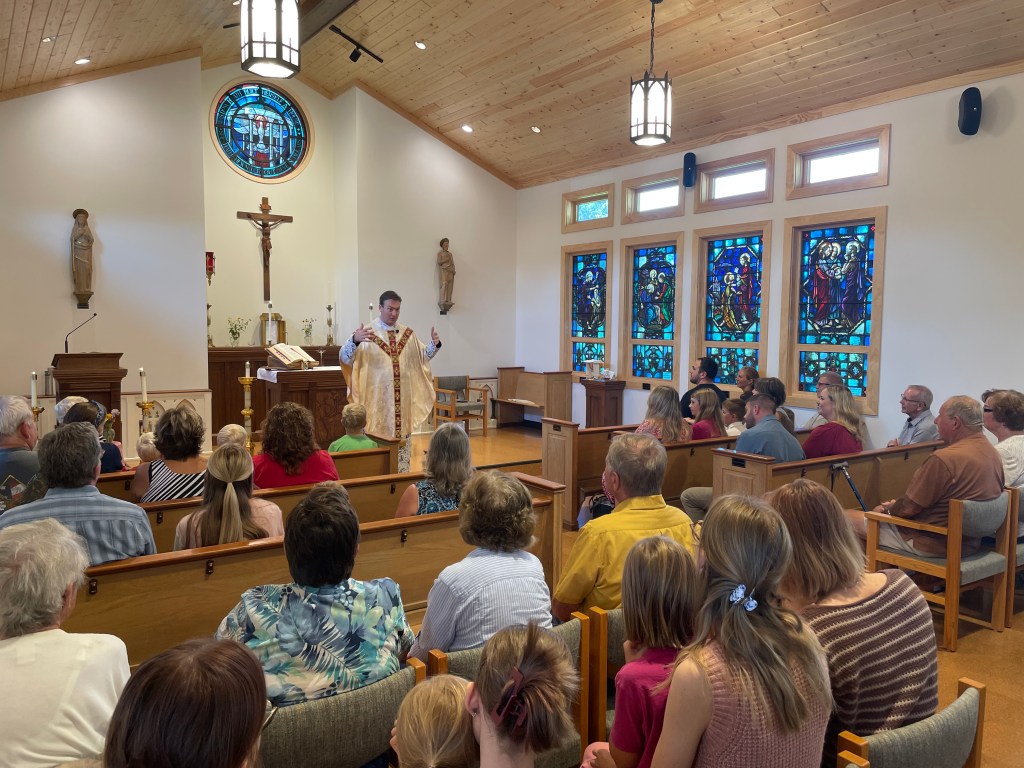
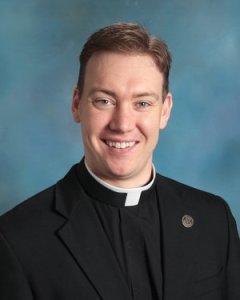
We are overjoyed to announce our new Catholic Ecology Center Chaplain, Father Andrew Linn! Fr. Linn replaces our founding Chaplain, Fr. John LoCoco. We are eternally grateful for the 5 years of service Fr. LoCoco has blest us with!
Fr. Andrew Linn has been a steady presence at the Catholic Ecology Center since our founding in 2021, saying Mass and assisting with retreats and events. He recently moved to the Neosho area when he become the pastor of St Kilian Parish in Hartford and St. John’s in Rubicon.
“Rejoicing in all that God has revealed of Himself through the Church, the Catholic Ecology Center invites the faithful and all who seek God to discover how he has also revealed Himself in creation. I am always moved by the beauty I discover at the CEC and am delighted to serve as chaplain.“
Here’s a little background about our new chaplain. He grew up in Shorewood as the oldest of seven children, and from a young age felt drawn to the priesthood. After high school at Marquette High and college at Notre Dame on an ROTC scholarship, he served as a Surface Warfare Officer in the U.S. Navy. While he loved the camaraderie and purpose of military life, he found himself still discerning God’s call.
Originally planning to become a doctor, he discovered a deep passion for philosophy and ultimately chose to pursue the priesthood after his military service. He entered seminary in Milwaukee after fulfilling his Navy commitment and was ordained a priest in 2016. Prior to his appointment to parishes near the Catholic Ecology Center, he served as an associate pastor at St. Anthony and St. Mary Parishes in Menomonee Falls. Prior to that role, he served as associate pastor at St. Monica and St. Eugene Parishes in Whitefish Bay and Fox Point.
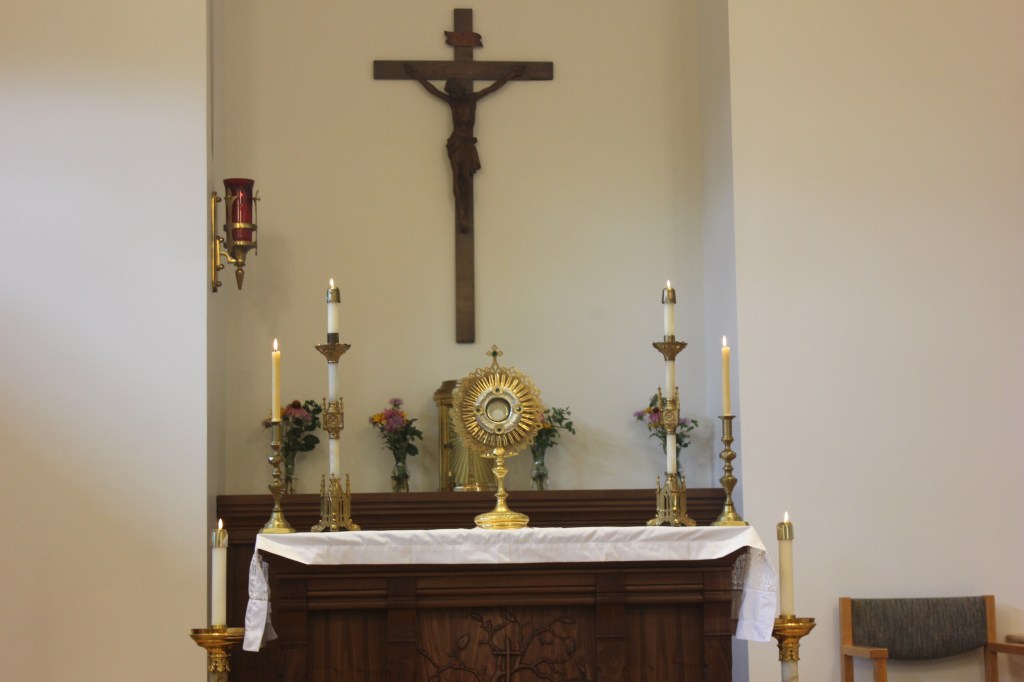
Please join Fr. Linn at the Catholic Ecology Center for Mass & Adoration every 3rd Monday of the month. Mass 8:30 AM; Adoration begins at 9AM with Benediction 3:30PM
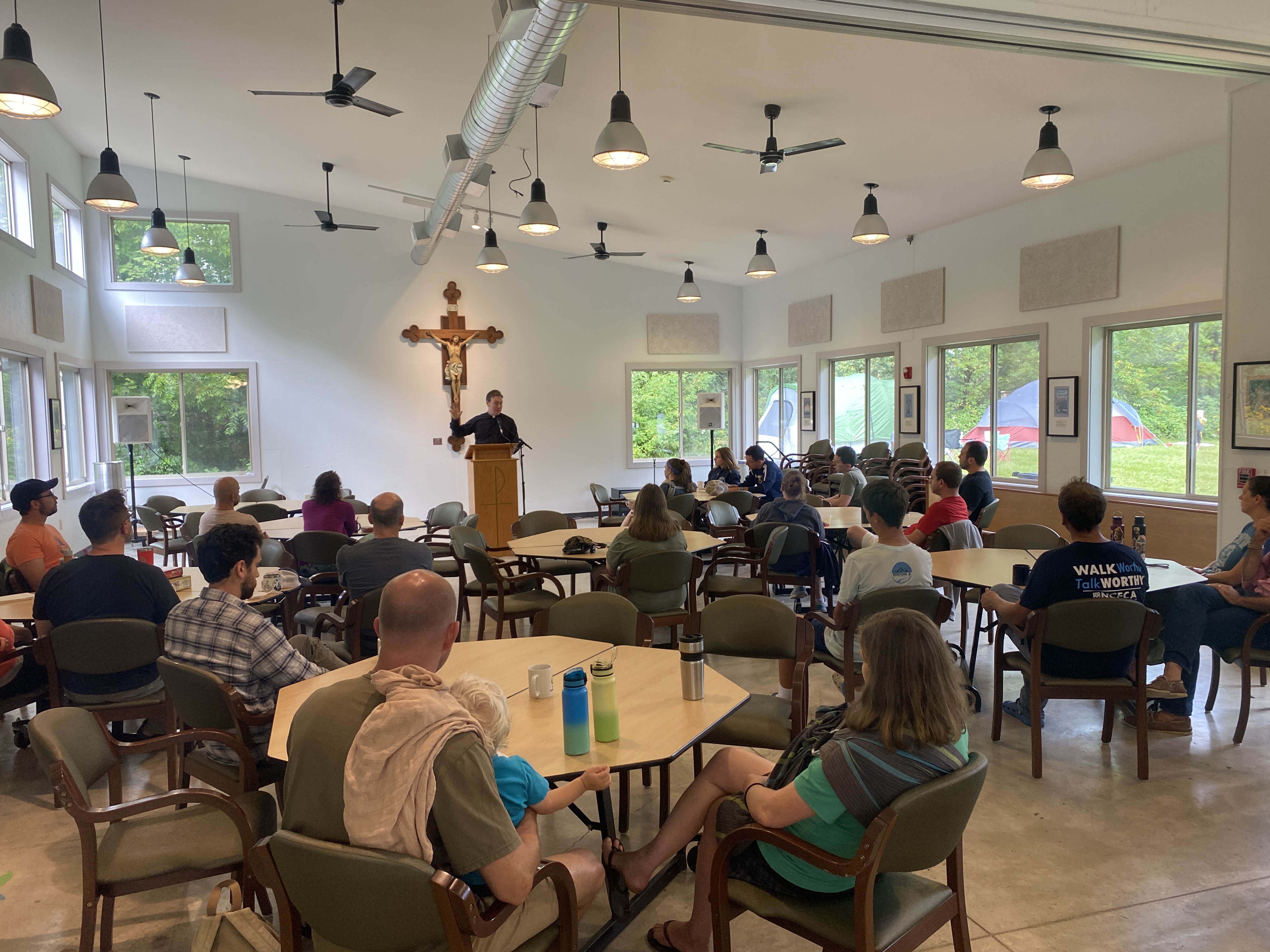
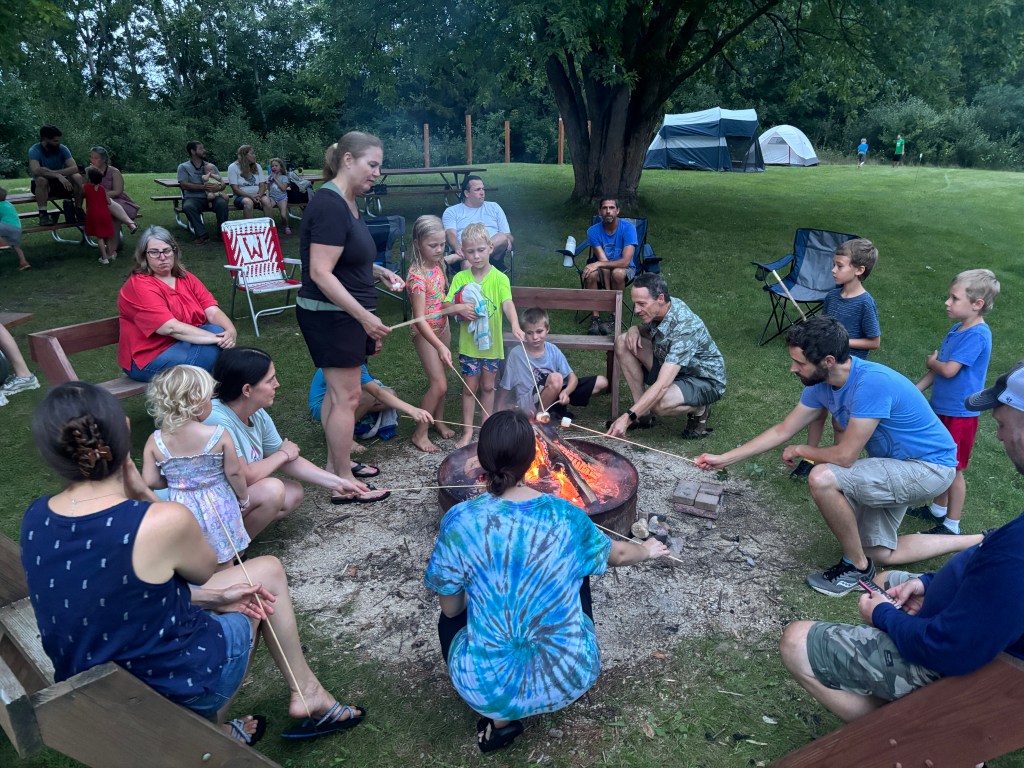
The annual Campout at the CEC was an incredible weekend filled with lots of faith, family, fun, and friends! This year’s campout began with the Mass of the Assumption, celebrated by Fr. Andrew Linn. After Mass and dinner, campers moved to our campfire where Andre Lesperance led us in praise and worship music while many marshmallows were roasted and smiles were shared!
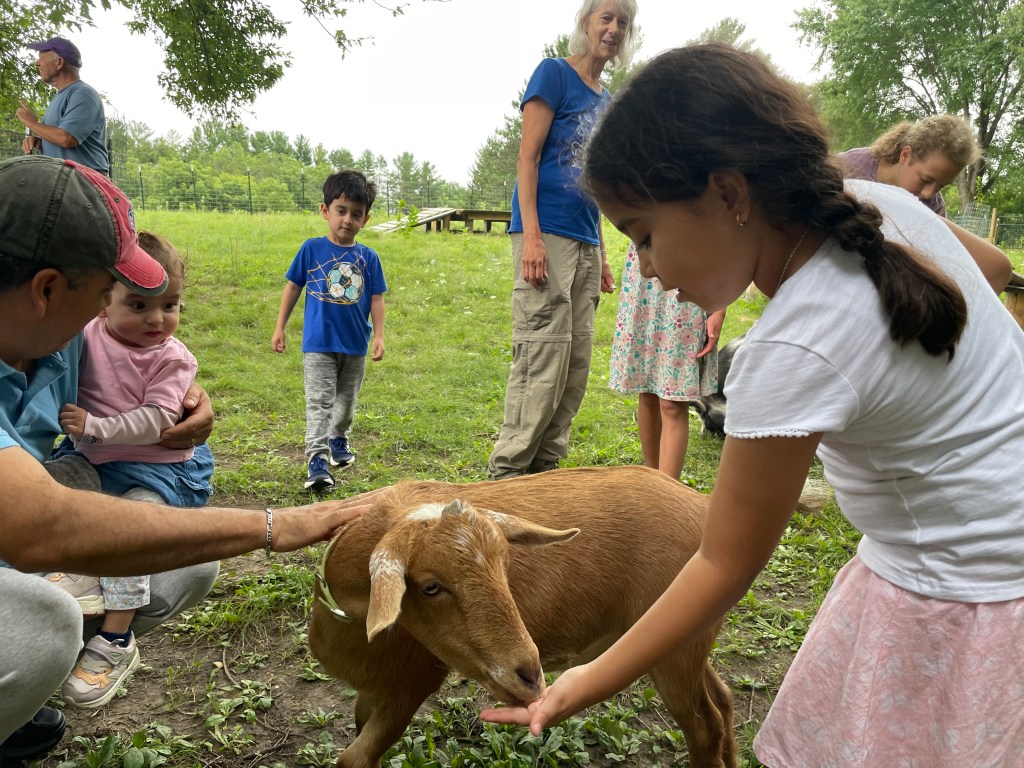
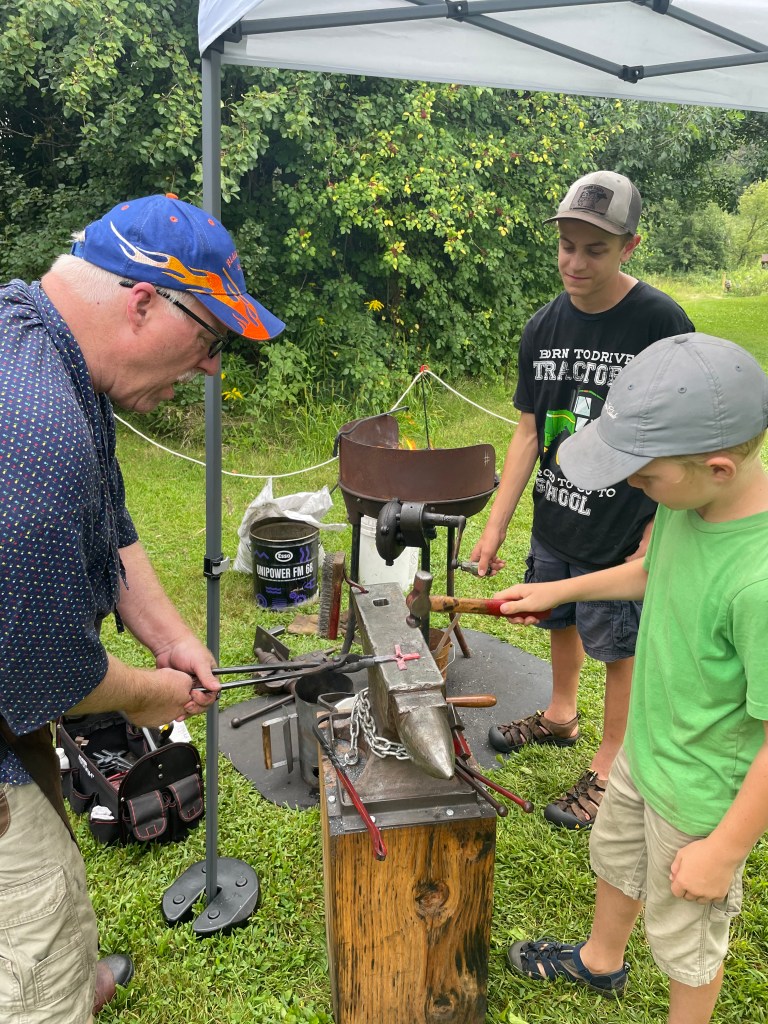
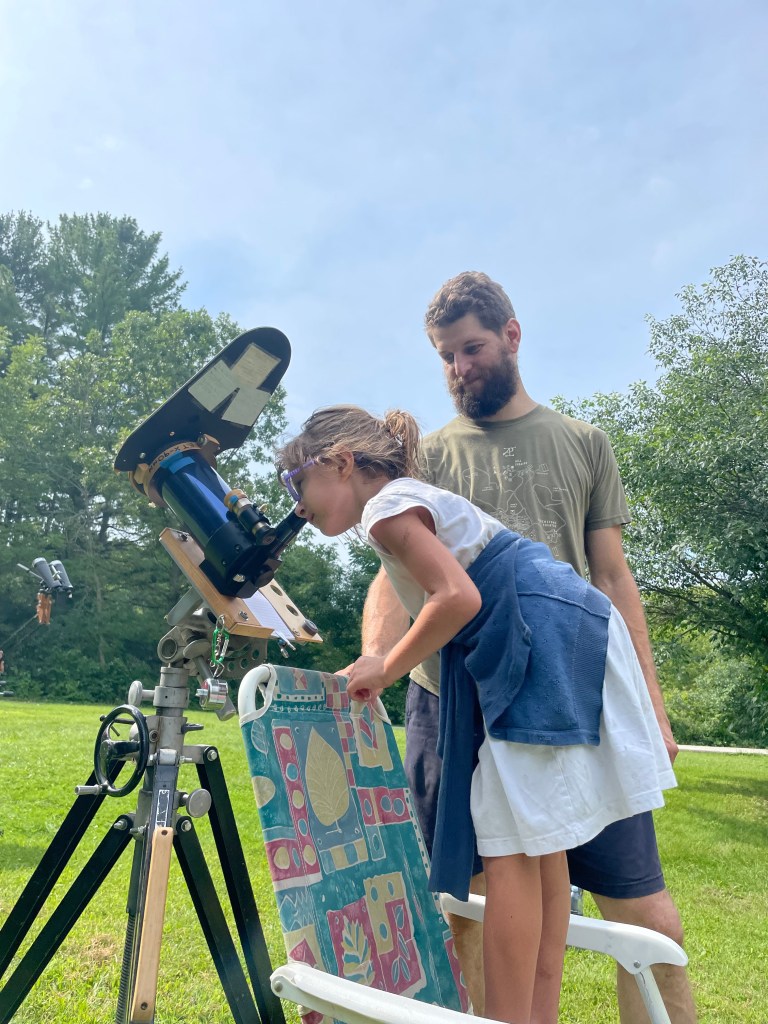
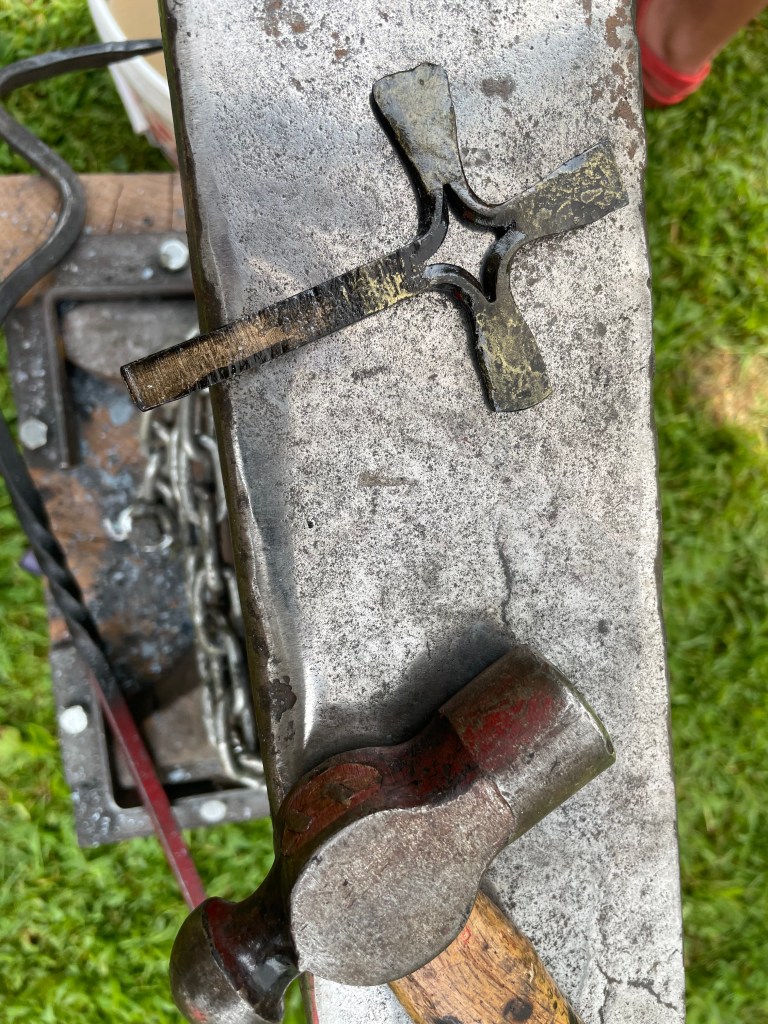
The next morning provided time for visits to the farm animals and a family rosary. Fr. Jacob Strand gave a catechetical talk and kids had the opportunity to play large group games. Throughout the morning there was an opportunity for families to drop by the blacksmith to learn the art of forging and shaping metal. Tim Burrus and Al Steinberg, two volunteer astronomers, came out and set up solar scopes- special telescopes with protective lenses, so campers could safely gaze at the sun and even see some sunspots!
While the early afternoon blest us with some showers, there were some great indoor programs including a talk by author Emily Koczela about her amazing series Very Young Catholics and a program all about monarch butterflies and their amazing migration!
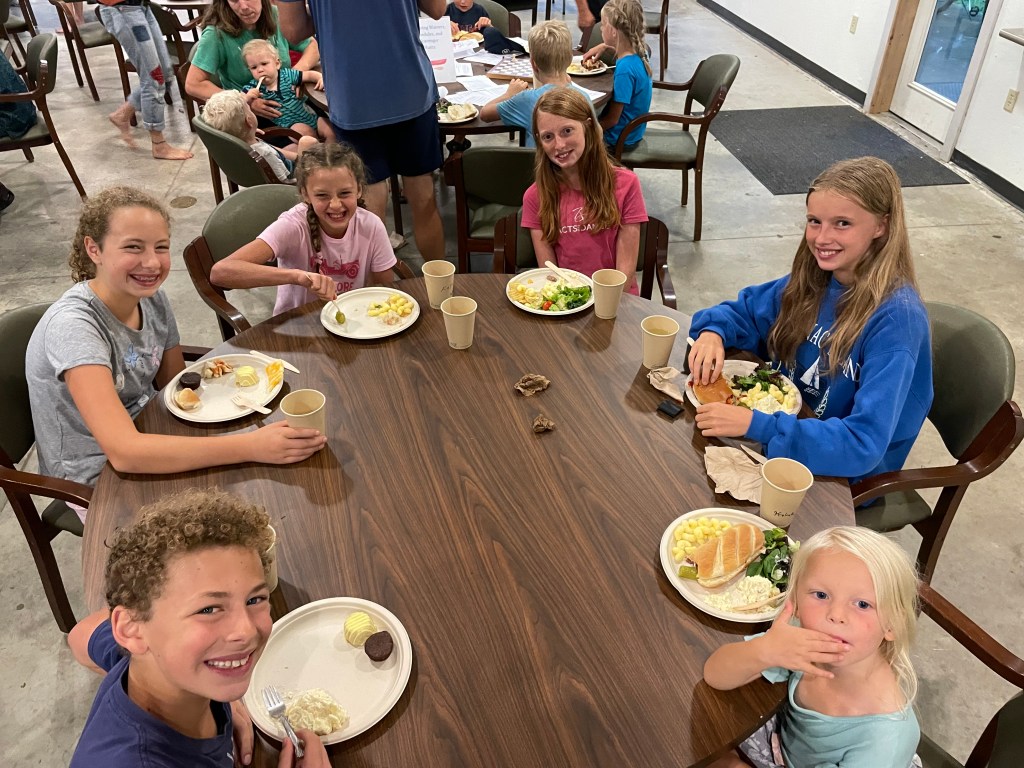
All of that fun was sure to work up an appetite, and there was plenty of food to go around at the barbeque on Saturday evening! Brats, hamburgers, potato salad, and many other summertime staples were munched on and enjoyed as people gathered together at JPII Hall.
After supper, people headed to our Holy Family Chapel for spiritual nourishment through confession and adoration led by Fr. Michael Joseph. It was humbling to see young and old alike gathered in such peace and reverence, connecting with our Lord in this intimate way. The night continued with more fun by the campfire as the sun set and night sounds surrounded us.
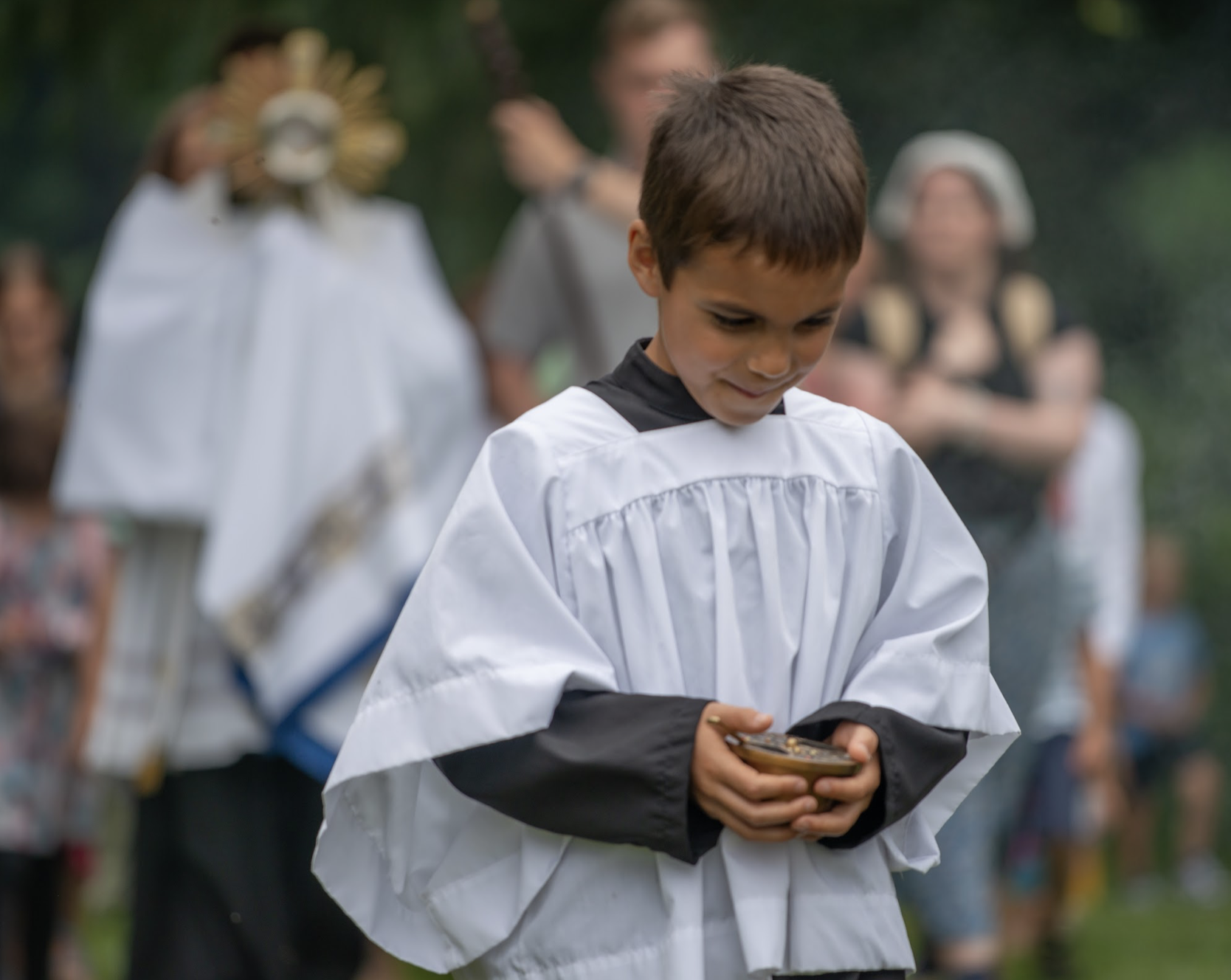
The campout concluded on Sunday with Mass in the Holy Family Chapel. Fr. Michael Malucha joined us as the celebrant, and we were graced with many great altar servers, musicians, and singers!
The campout was a weekend jam packed with blessings- we are so thankful for the many priests, musicians, cooks, volunteers, sponsors and loving hearts who pitched in and participated to make it such a joyful, fabulous time! We are blessed to have such an incredible community of amazing people- it was truly a time to rejoice in the goodness of God, others, and the natural world around us!
This past weekend, the world gathered by the thousands to celebrate the life and mourn the passing of Pope Francis: the 265th successor to Peter and Shepherd of the Catholic Church. His life was a testament to a humble, sincere love that permeated all relationships: with God, others, and the environment.
What’s in a name?
From the very start of his shepherdship, the Argentinian Jesuit set the tone for his papacy with the choice of his papal name: Pope Francis. The name is a first in the papacy and is in tribute to St. Francis of Assisi, the well-loved saint known for having a heart for God’s creation: the plants, animals, and the people, especially the poor.
Pope Francis acted in imitation of his namesake as he also had a heart for the marginalized and vulnerable. Whether it was washing the feet of the poor on Holy Thursday, designating a Jubilee Holy Door at a Roman prison, or connecting with those at the lone Catholic parish in war torn Gaza every night at 7pm, he was a man who not only noticed, but cherished those around him – acting so that others would feel the love of God.
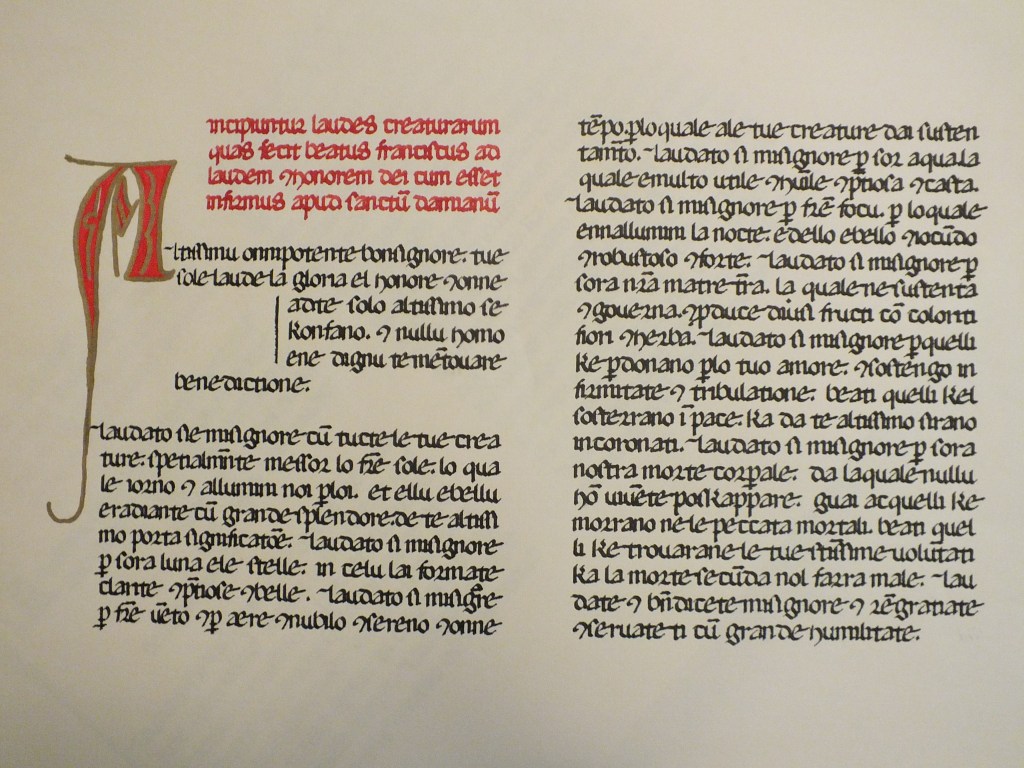
He also had a heart for creation, following in St. Francis’ footsteps, as evidenced by the publication of his encyclical, Laudato Si. Laudato Si is Italian for “Praise to you” and comes from St. Francis of Assisi’s work, The Canticle of the Creatures. In this prayer, St. Francis beautifully captures the magnificence of different aspects of the natural world and expounds how they all raise their praises to God above. A passage reads:
“Praised be You, my Lord, with all Your creatures, especially Sir Brother Sun, Who is the day and through whom You give us light. And he is beautiful and radiant with great splendor; and bears a likeness of You, Most High One. Praised be You, my Lord, through Sister Moon and the stars, in heaven You formed them clear and precious and beautiful.”
Though it may seem strange to think of the sun as a brother or the moon as a sister, in choosing these words St. Francis illustrates a relationship with the world around him. There is a sense of familiarity and care that wells up akin to that found in familial relationships.
It is the strong basis of relationship that is woven throughout Pope Francis’ encyclical Laudato Si, too. He writes: “Human life is grounded in three fundamental and closely intertwined relationships: with God, with our neighbour and with the earth itself.” ( Laudato Si, pp 66).
While not the first pope to do so, in his encyclical and in multiple instances throughout his papacy, Pope Francis highlighted in a special way, that in order to love God and live out the Gospel message of caring for our neighbor, it necessitates that we care for our common home. He wrote: “Living our vocation to be protectors of God’s handiwork is essential to a life of virtue; it is not an optional or a secondary aspect of our Christian experience.” (Laudato Si, pp 217).
How do we do this, though? How do we care for those halfway across the world that we may never meet? How do we act in service of the environment when the destruction and effects are so stark and far reaching? The answer is one akin to the charisms and legacy of both St. Francis of Assisi and Pope Francis: humble and unassuming, but with long lasting reverberations. Pope Francis wrote: “An integral ecology is also made up of simple daily gestures which break with the logic of violence, exploitation and selfishness.“ (Laudato Si, pp 230).
In the small everyday gestures of saying no to buying a new gadget, saying no to taking a long shower, or saying no to leaving the lights on in the room as you leave, you are simultaneously saying yes to living a life of care: for God by cherishing his gift of creation, for others as you share the resources they too need, and of course for the environment as you soften your impact. It is a humbling yet profound reality that in something so small, we can demonstrate so great a love.
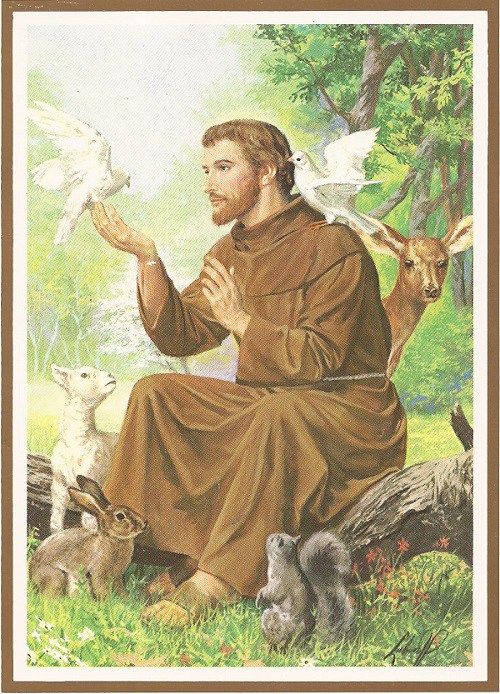
St. Francis of Assisi’s original Canticle of the Creatures. This year, 2025 marks its 800th anniversary! Anther great nature lover of the Catholic Church, St. Francis of Assisi is often depicted with animals.At his introduction to the Church as Pope Francis.
Stirring the Heart
The beautiful and inspiring call for the faithful to live a life of integral ecology that Pope Francis articulated so eloquently in Laudato Si stirred the hearts and minds of many throughout the world. One who was particularly taken by this was our founder, Joe Meyer, who has always had a heart for creation. As a science teacher at Marquette University High School and lover of all things outdoors, he’s spent hours birdwatching, studying ecology, and generally marveling at the wonders of the natural world. If you’ve ever had a conversation with him, you know the unbridled enthusiasm that radiates as he teaches and shares his knowledge and love of the environment!
Upon hearing the call of Pope Francis through Laudato Si in 2015, Meyer was drawn to do something more. By 2016, he had founded Laudato Si Project, a nonprofit dedicated to restore humanity’s connection to the natural world through faith, education, stewardship, and recreation.
For years, he went to schools and parishes, facilitating retreats, ecology workshops, and service projects so that others could grow in relationship with Christ and His creation. After 2 years it was evident to him that as the mission and desire for the ministry was growing, there was a need for a more a physical and permanent home! In 2021, Meyer was able to open the Catholic Ecology Center in Neosho, WI.
Through the many blessings of God, lots of hard work, and the generosity of countless volunteers and donors, we have been able to serve and work with nearly 25,000 people in the four short years since our opening. Whether by grooming the goats, praying at the outdoor stations of the cross, or learning about amphibian life cycles by looking for tadpoles by the pond, each day brings a new opportunity to encounter the beauty of nature, the goodness of others, and the glory of our God behind it all!
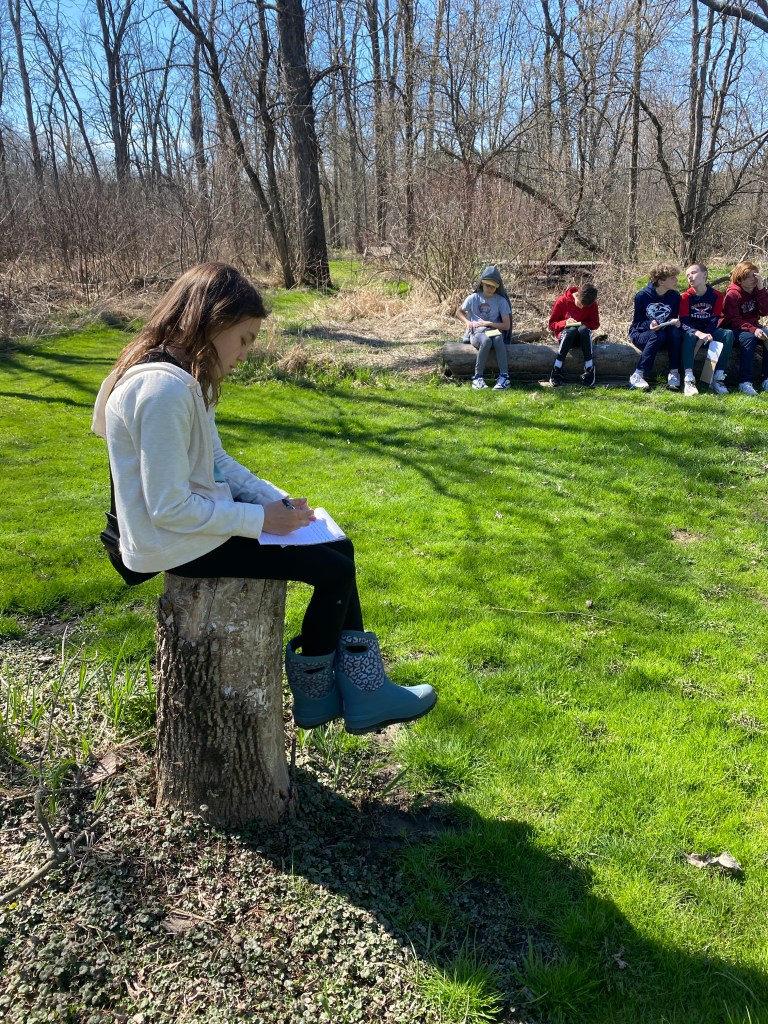
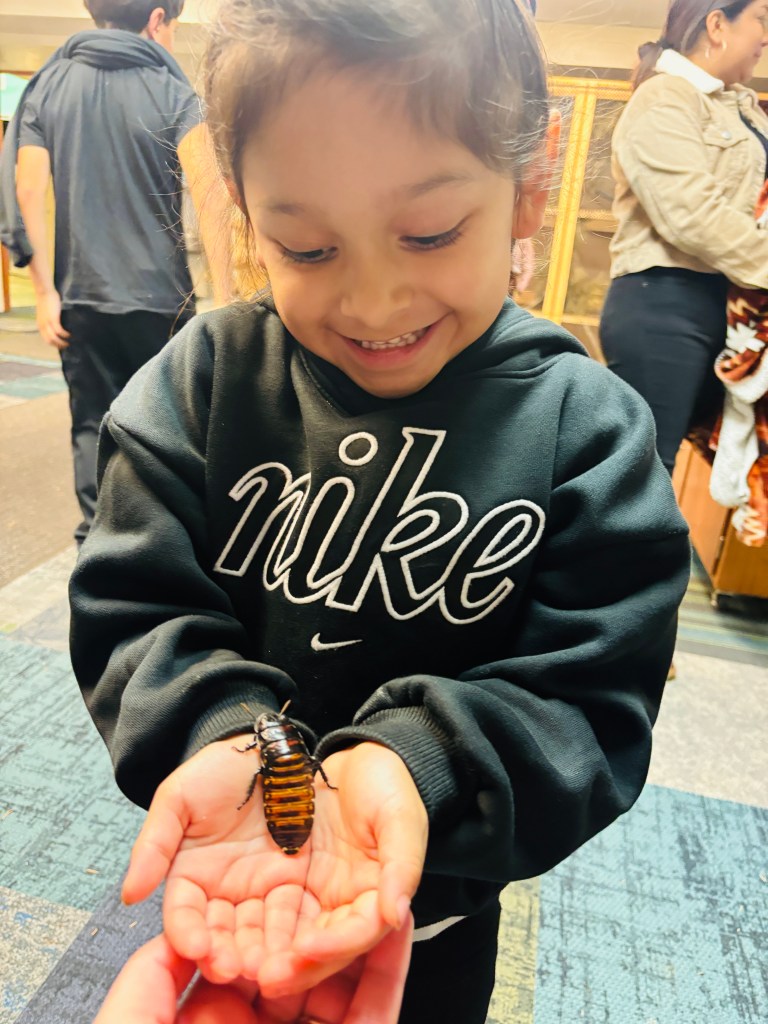
An aerial view of the Rubicon River which winds through the property.Founder Joe Meyer sharing the wonders of the natural world with others.Inspiring care for our common home, one encounter at a time! The CEC’s home in Neosho!Taking some time to reflect amidst God’s Creation.Water Quality Testing. Delighting in all of God’s creatures- even the cockroaches!Students deepening their relationship with God. Enjoying nature during all seasons!
Praying for Pope Francis
As he did so much to inspire our mission, we hold Pope Francis close to our hearts these days and always as we pray for the repose of his soul. In his words, deeds, and ministry he illuminated the real and critical responsibility we have to be stewards of creation and to sow love through our daily choices. As we pray for the Pope and remember him in the coming days, let us work to act in imitation of the man who was a shepherd to so many, and follow his challenge for us to be “protectors of creation, protectors of God’s plan inscribed in nature, protectors of one another and of the environment.” (Papal Homily, March 13, 2019).
An Amazing Summer: New Building Addition Grand Opening, Building Blessing, National Eucharistic Procession at the CEC and Chapel Dedication Mass with the Bishop!!
The Lord continues to richly bless the ministry of the Catholic Ecology Center! When we say yes to the Holy Spirit, hold on tight because God will use you in amazing and unexpected ways. It would be an understatement to say that the last 3 and a half years of the Catholic Ecology Center has been incredible. With our humble beginnings purchasing a Girl Scout Camp in 2021, to over 7000 people visiting the CEC in 2023, it has been amazing to see all the ways our mission is connecting to Christ and His creation and making a home for Jesus at the CEC.
National Eucharistic Pilgrimage Stops at the CEC
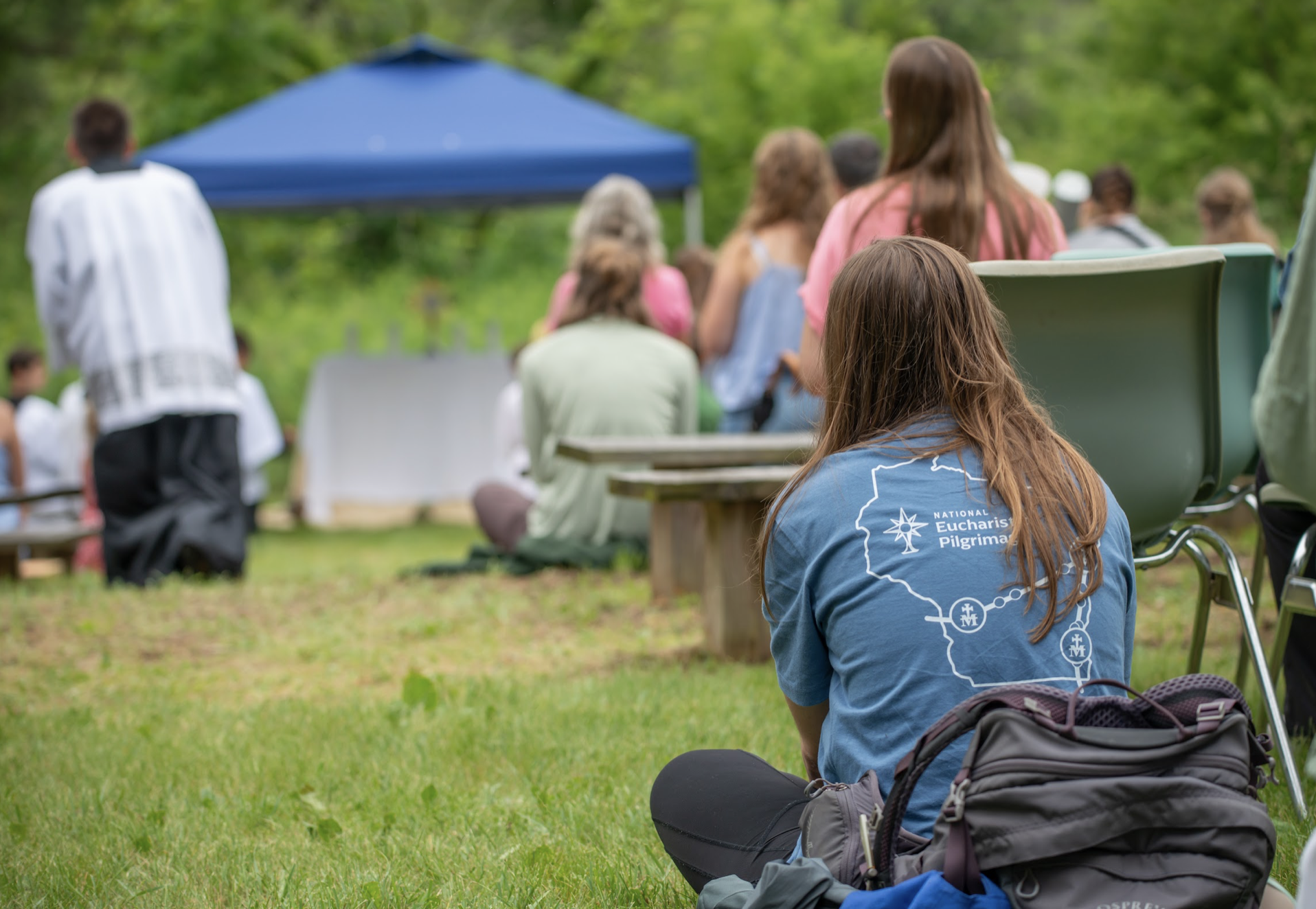
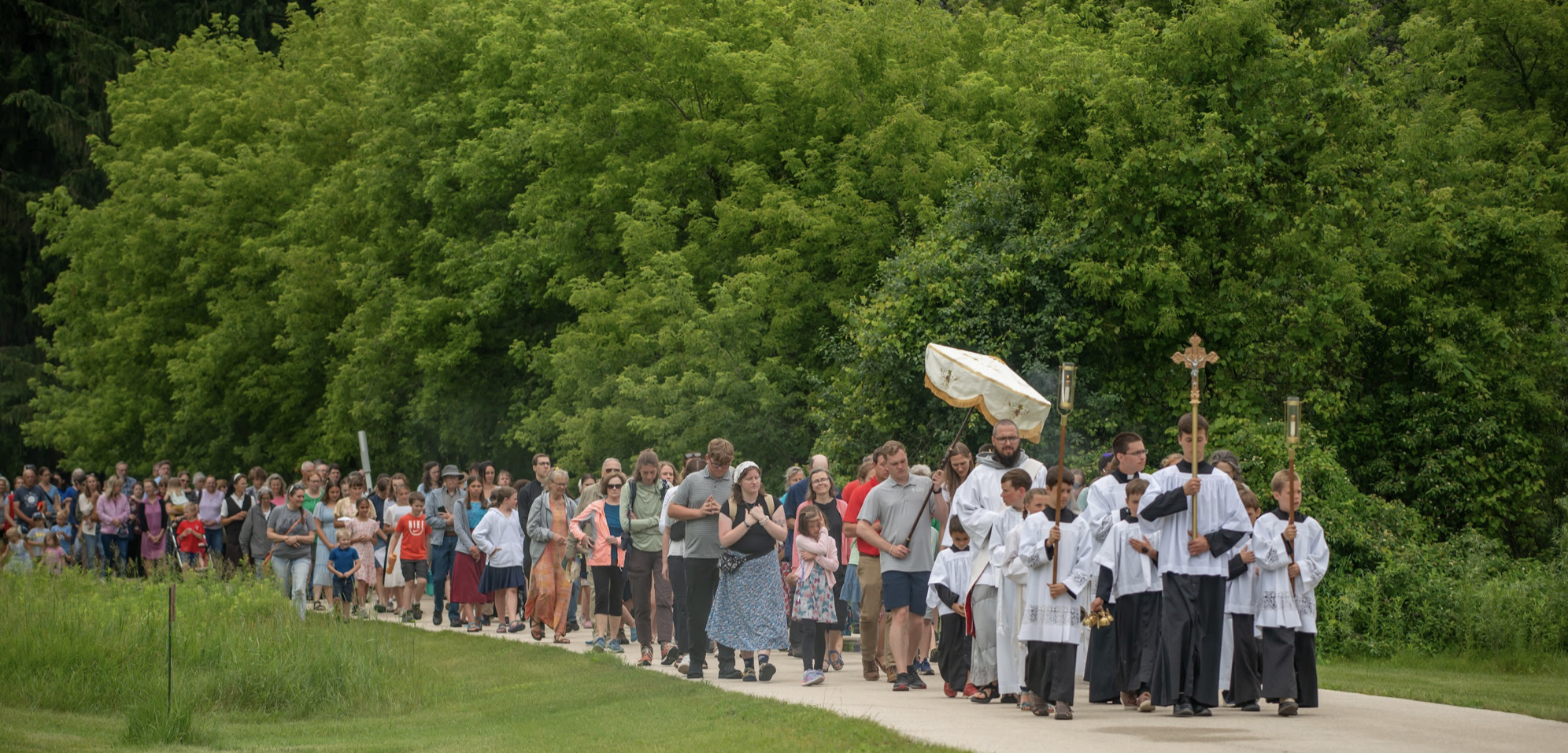
It was truly an honor to have the CEC as a stop in the National Eucharistic Pilgrimage. Prior to their stop at Holy Hill, the Eucharistic van and perpetual pilgrims arrived at the CEC shortly after noon. Over 200 faithful pilgrims awaited Jesus’ arrival. We began with adoration in our new Holy Family Chapel followed by a procession through the beautiful prairie lined road that meanders its way through the CEC property. This procession ended at our amphitheater where we enjoyed a Holy Hour of Adoration accompanied by the singing of the faithful but also that of the birds! Adoration was followed by benediction and procession back to the main CEC building saying the Divine Mercy Chaplet.
Grand Opening Celebration and New Building Blessing
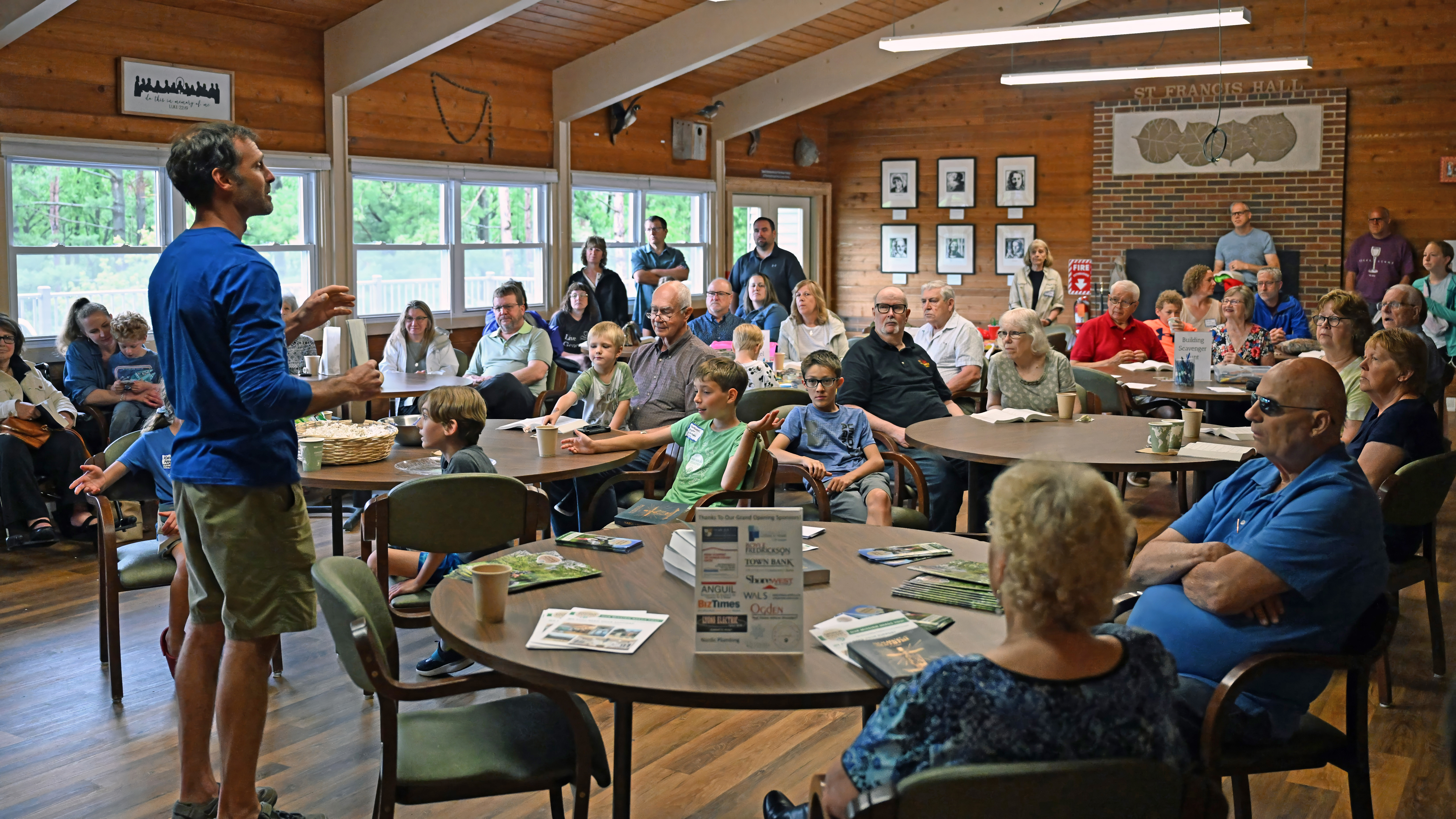
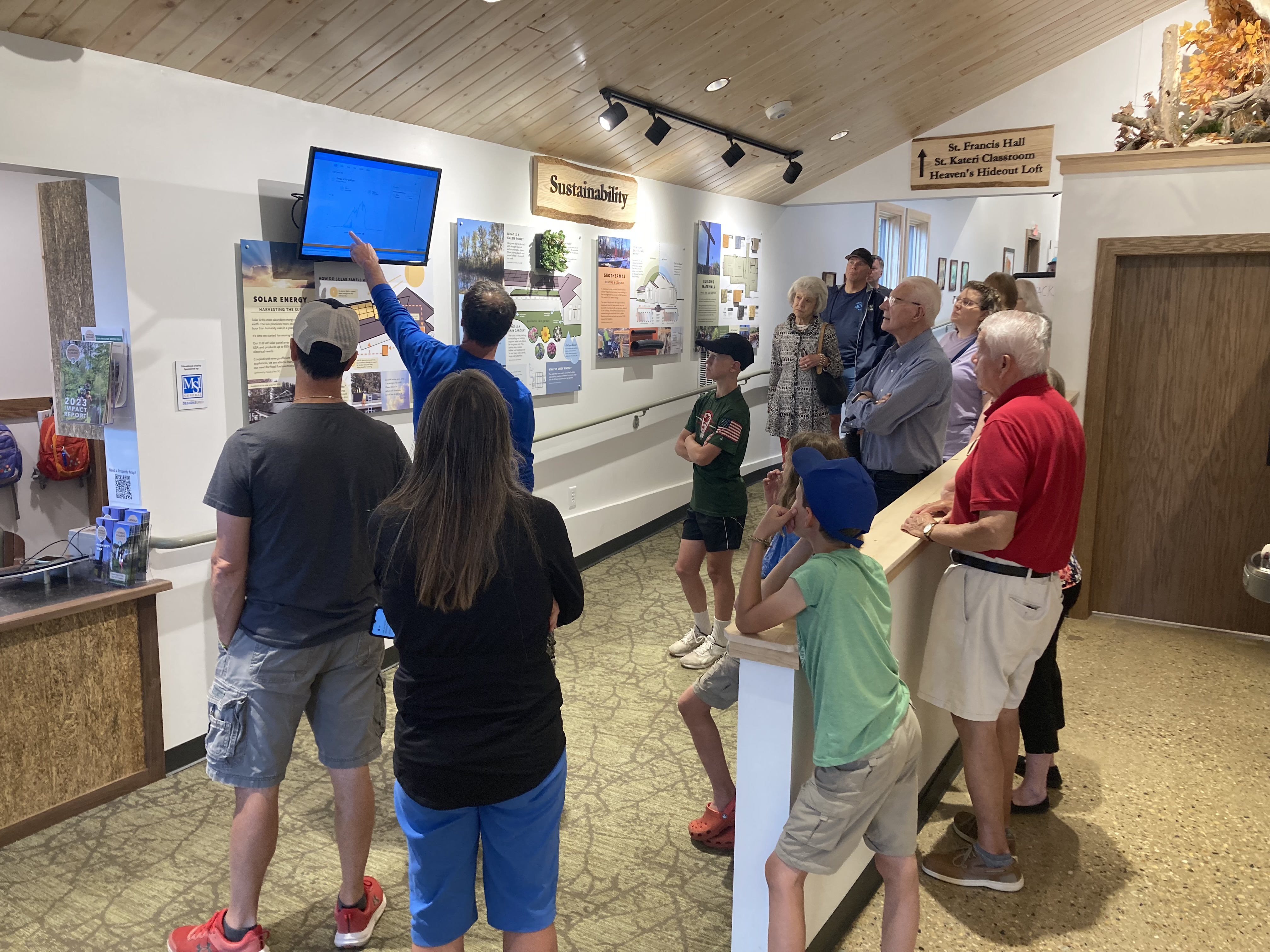
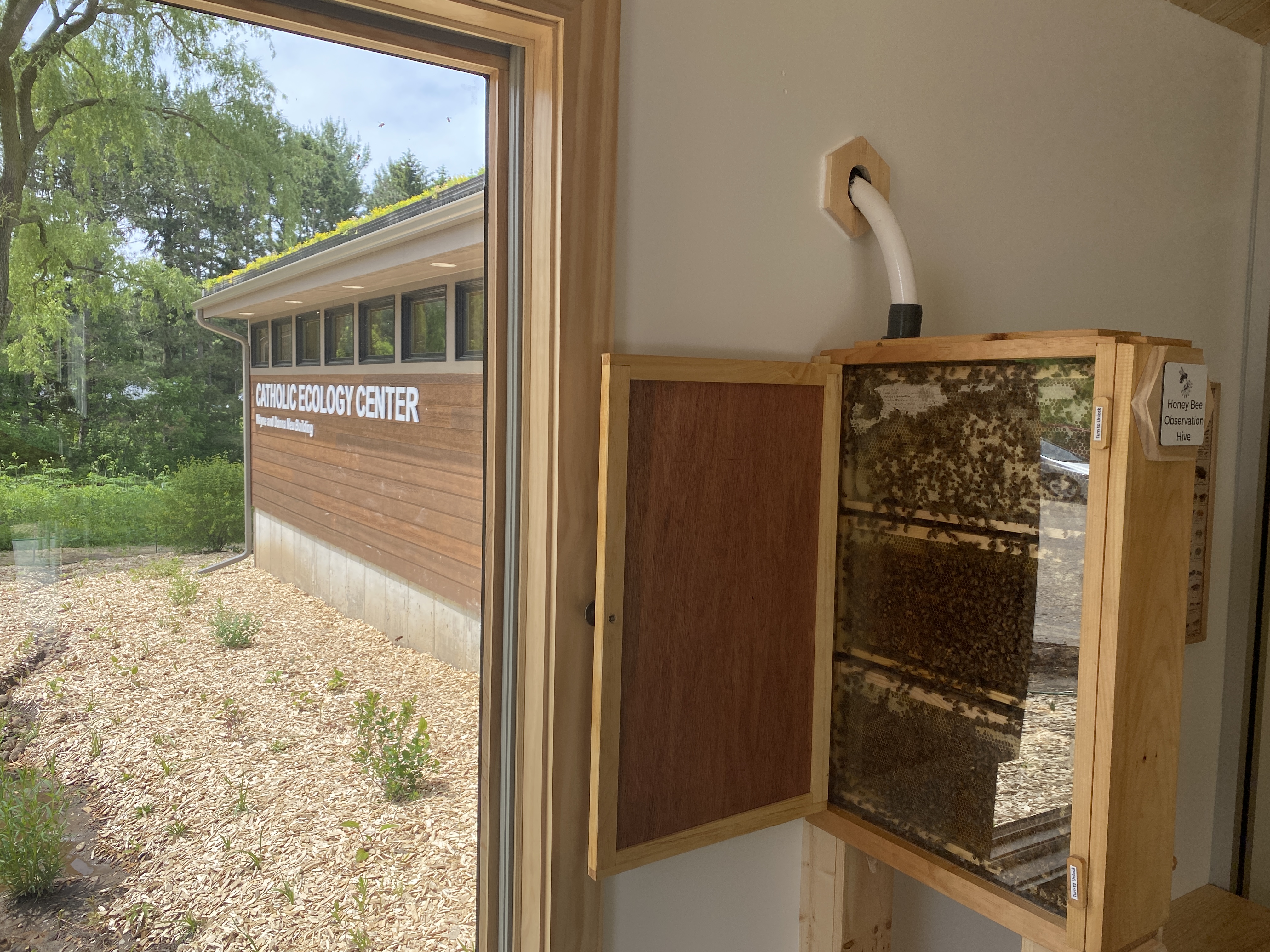
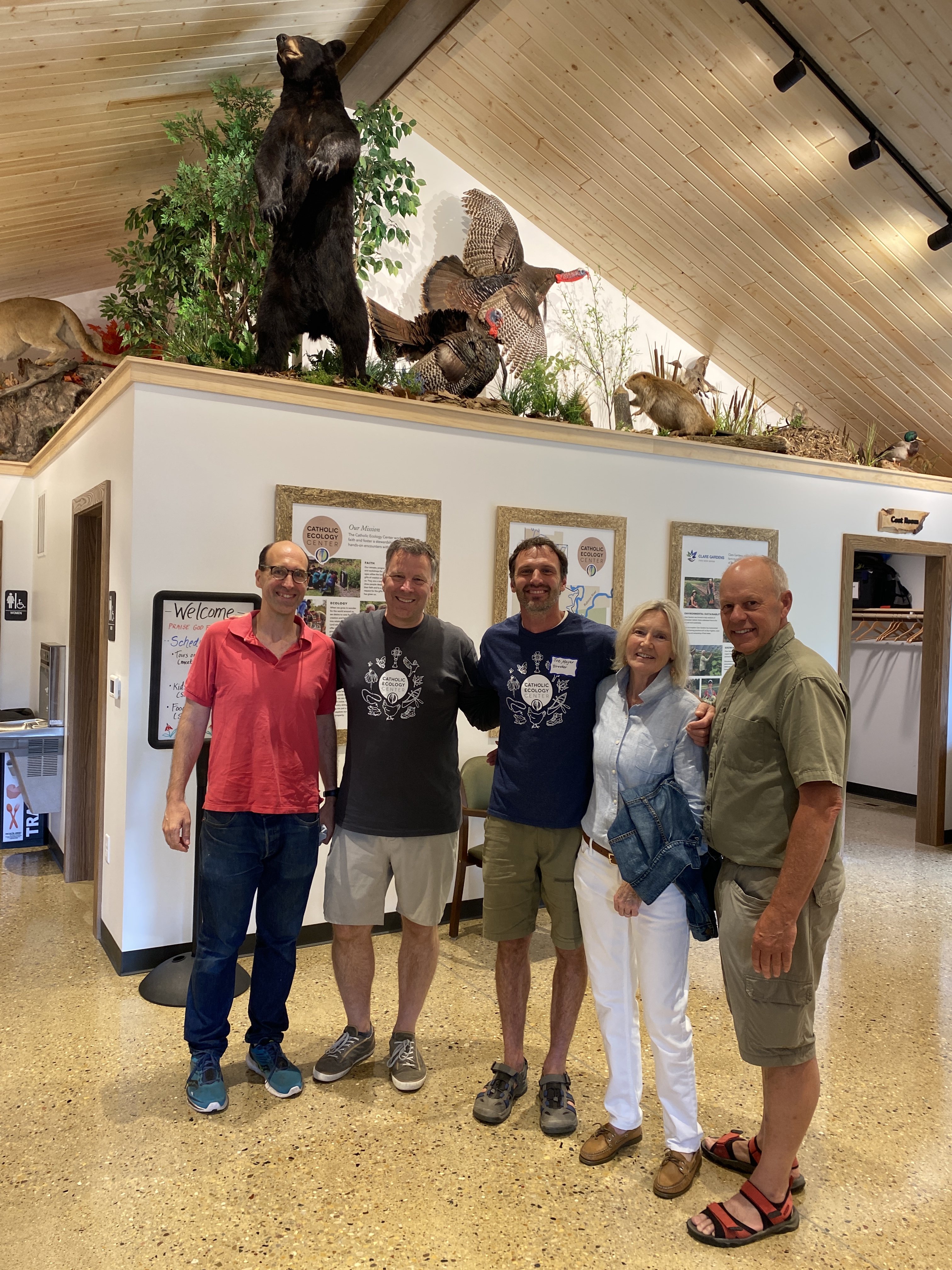
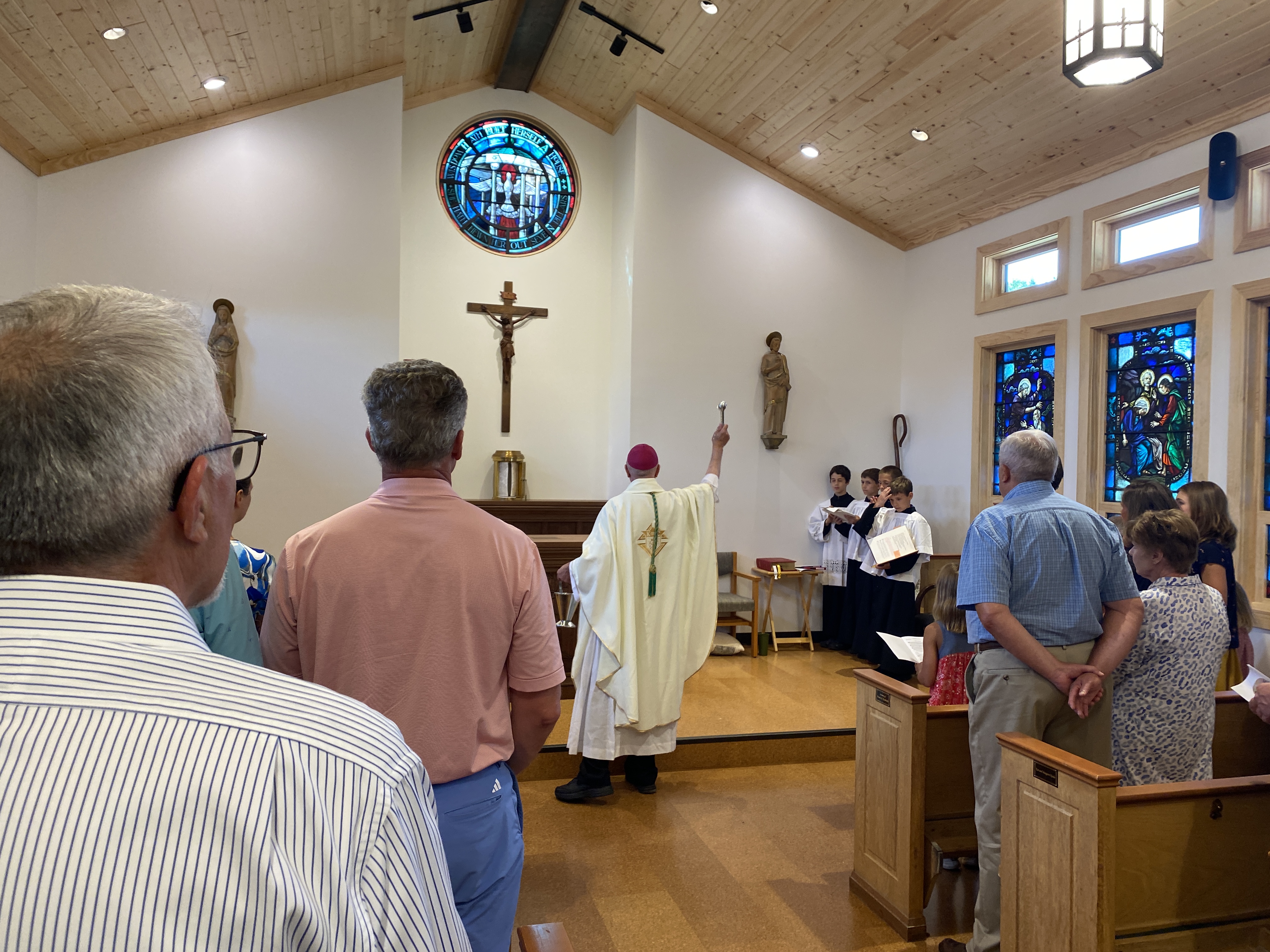
We completed our 3500 square foot building addition in June and held a weekend of open house celebrations that included a blessing of the building. Nearly 300 hundred people attended that weekend to tour the new facilities which include the Holy Family Chapel, Welcome Area, Frassati Breakout Room and Outdoor Viewing Deck. Attendees learned about our focus on sustainability within the building’s energy, water conservation and building materials. They also learned the rich history of the statuary, stained glass and paintings that reside in our Chapel. Thanks to Father Michael Joseph for doing our building blessing and Andy Gilicinski of Charism Photography, LLC for his photography. More about our building addition grand opening and blessing can be found in the Catholic Herald Article HERE
Holy Family Chapel Dedication and Consecration of the Altar
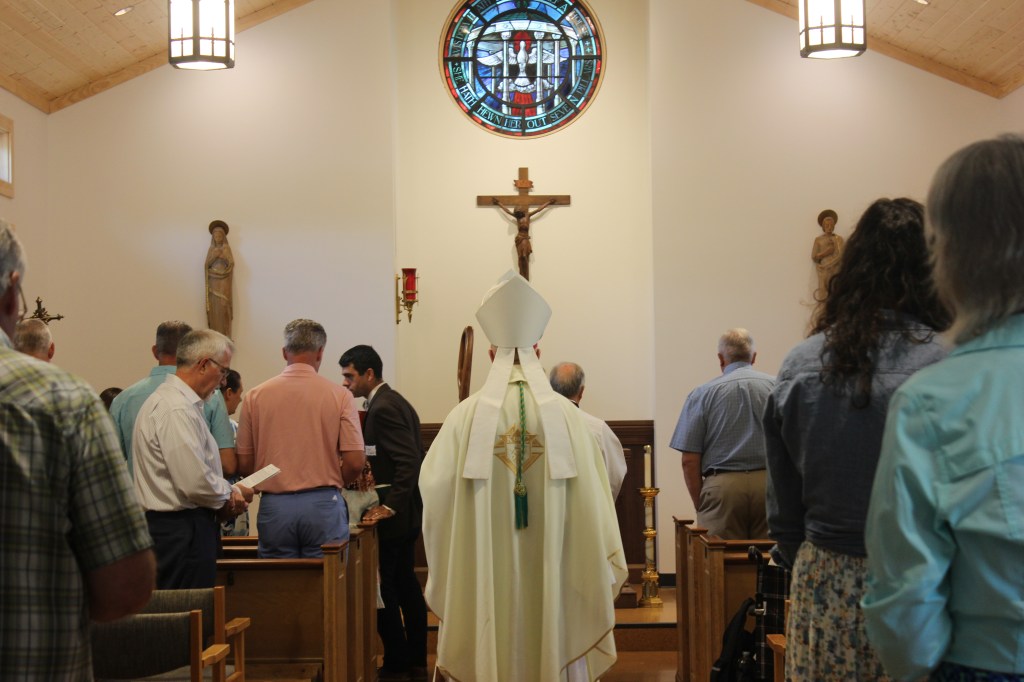
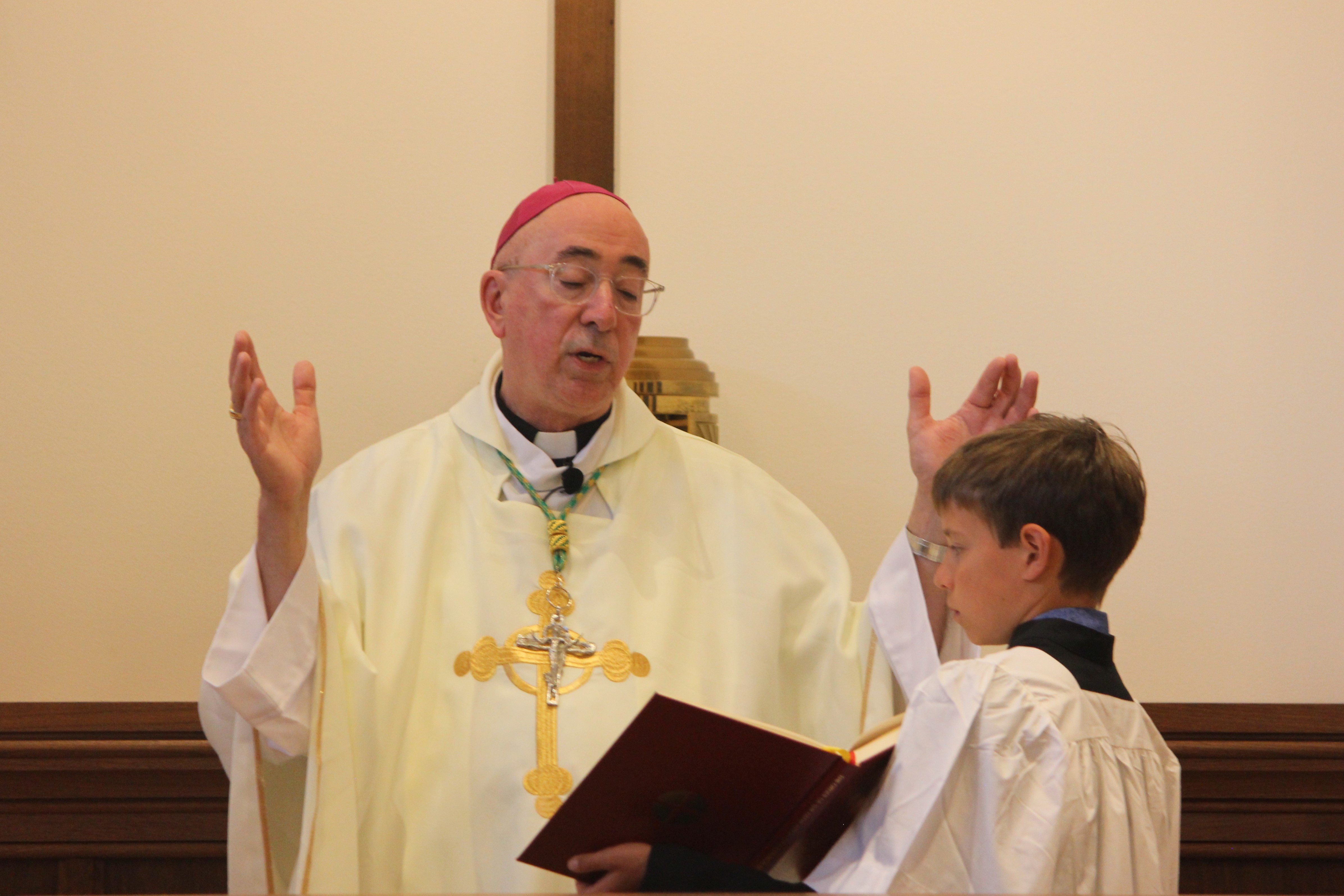
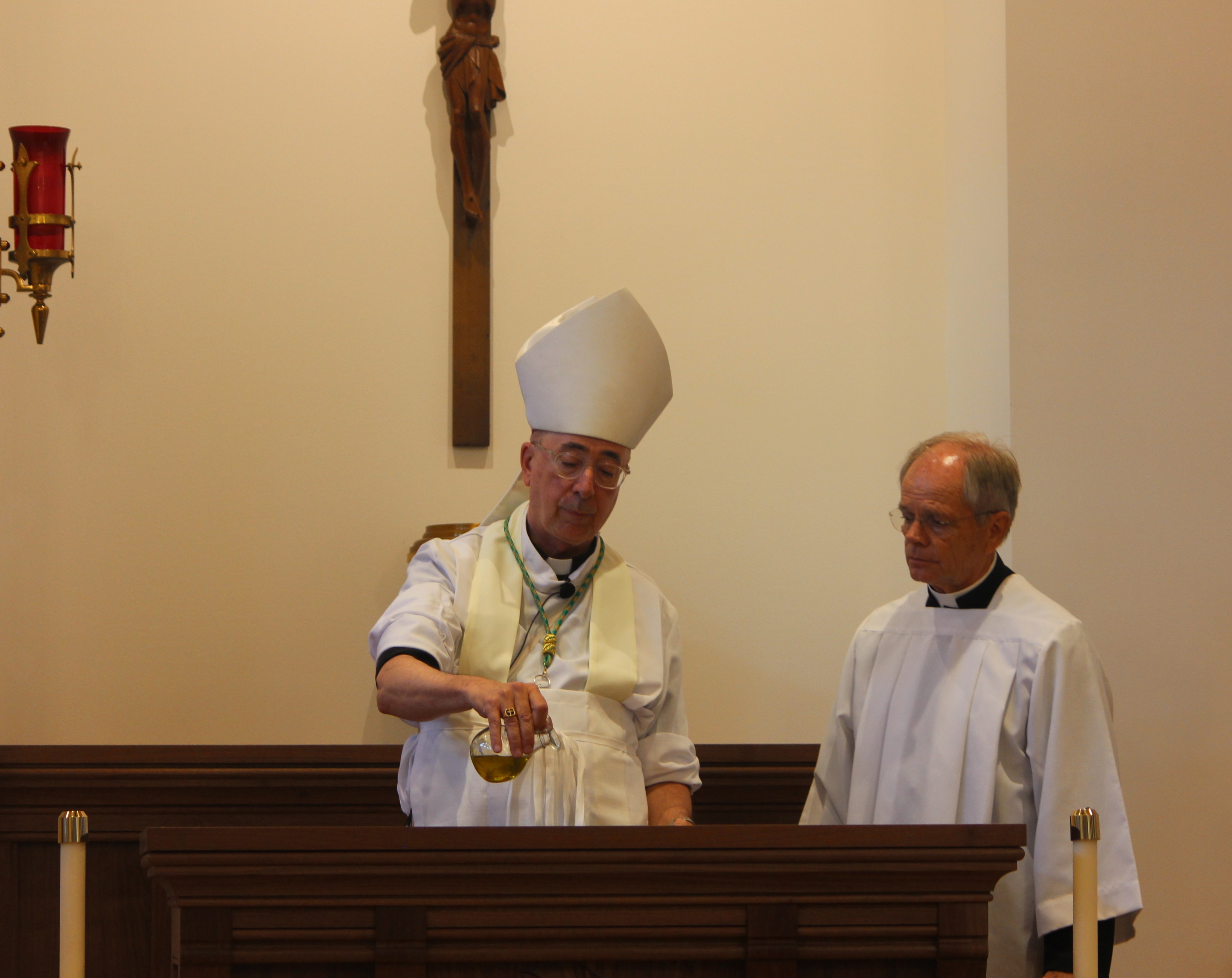
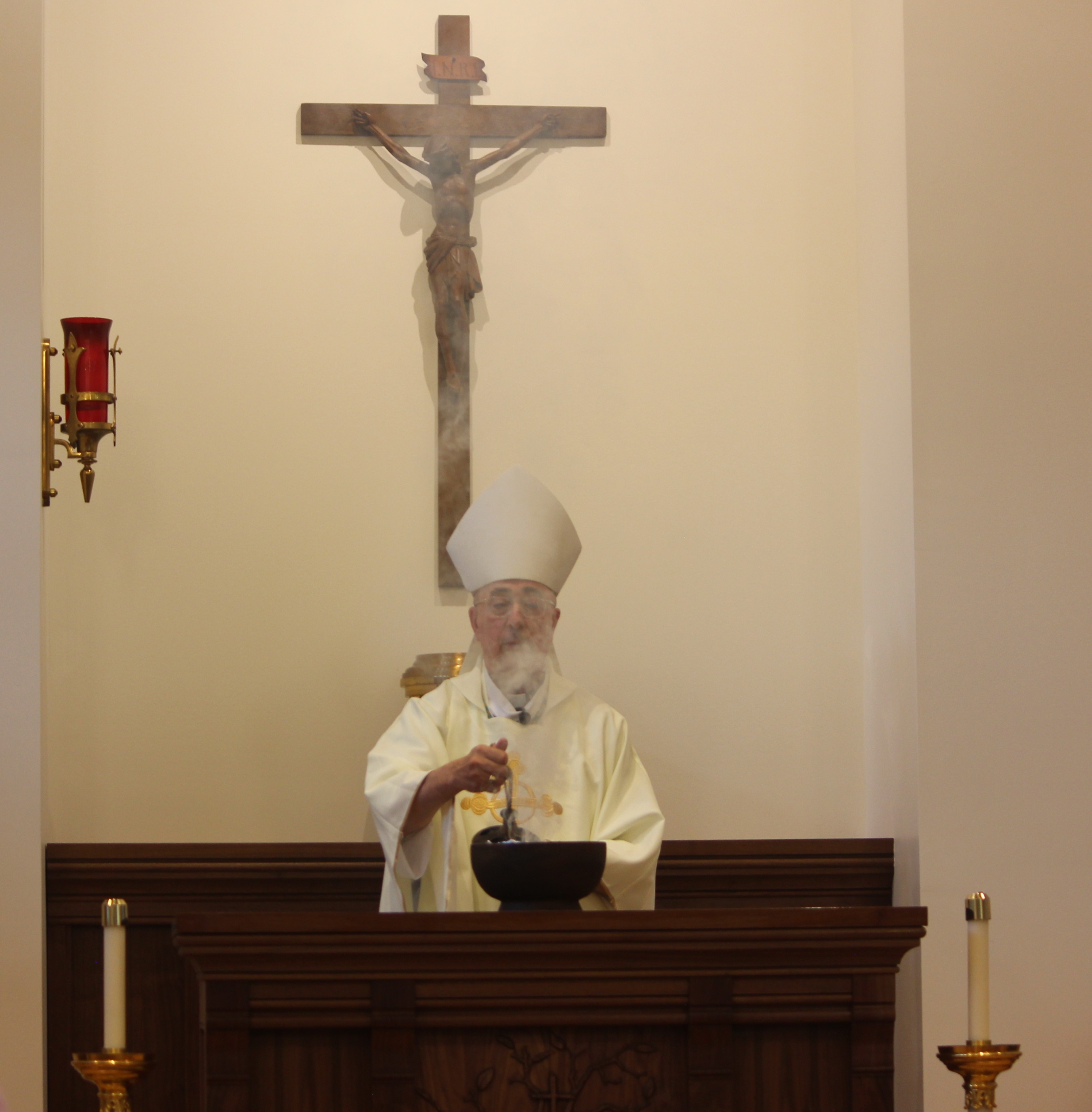
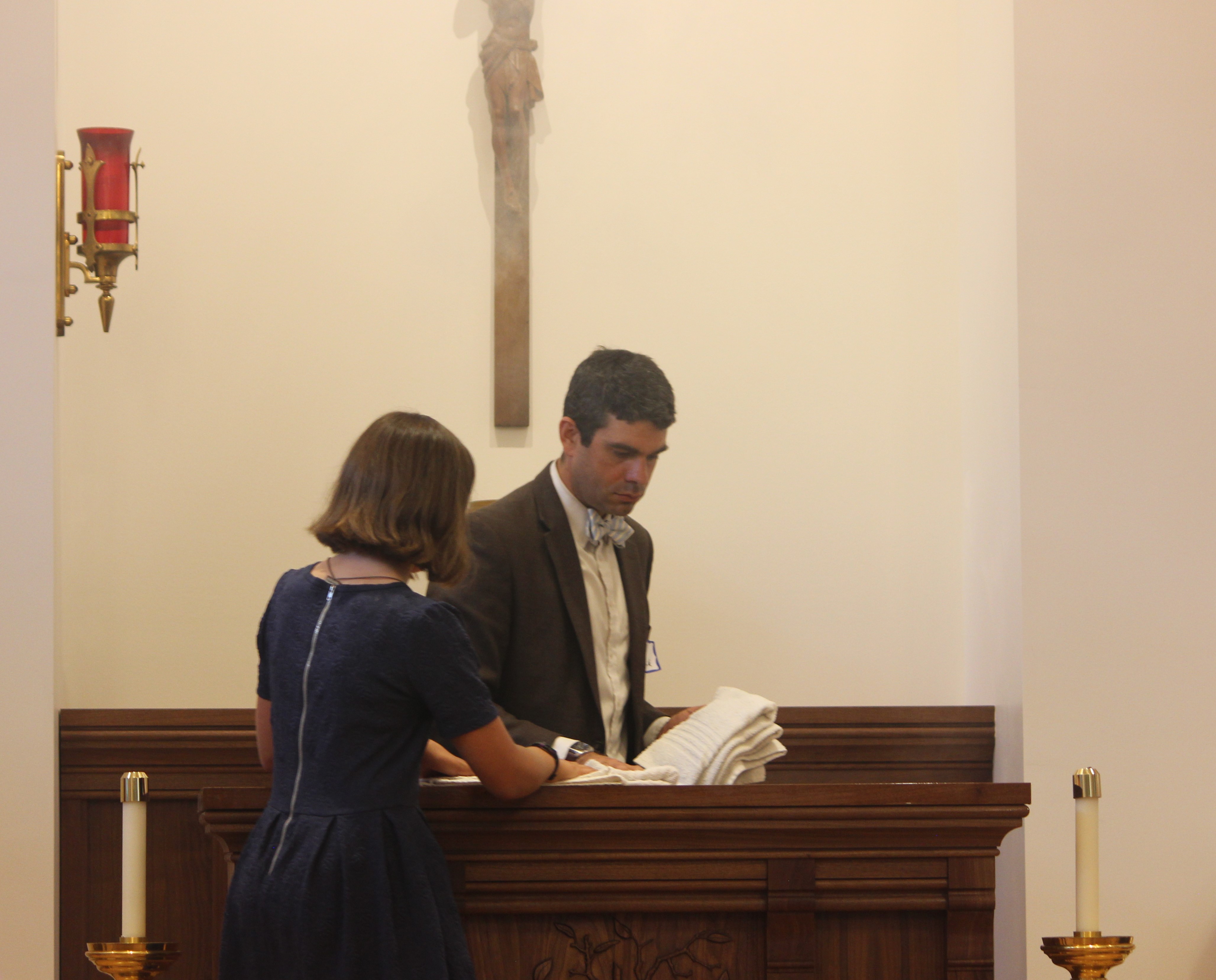
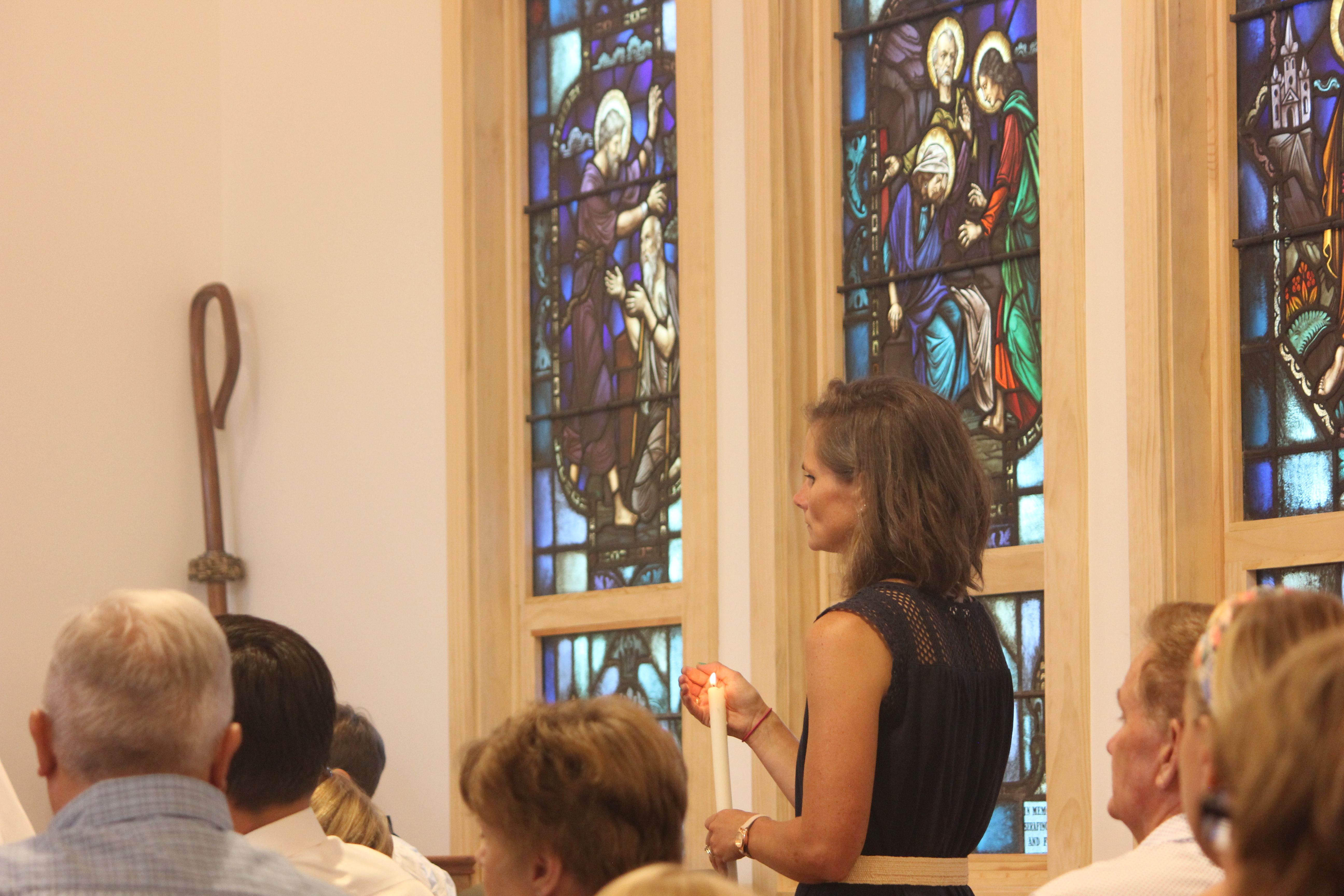
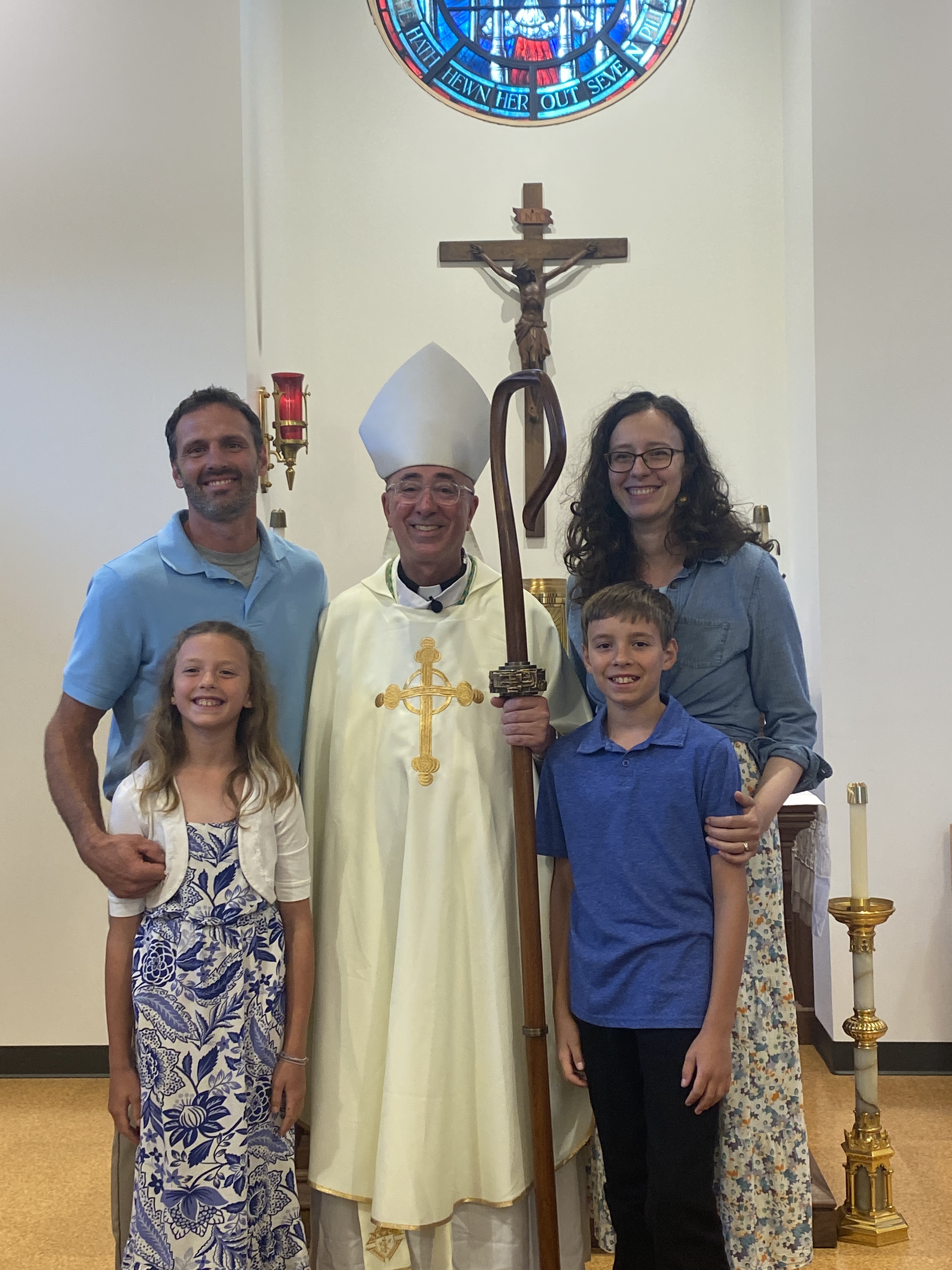
Bishop Schuerman came to the Catholic Ecology Center to bless and dedicate our new Holy Family Chapel, as well as, consecrate the new altar. If you have never been to a new Church dedication, it is truly a special ritual with profound spiritual richness not found elsewhere. We are humbled by all the generous people who made this building a reality and are excited to see how the Holy Spirit will continue to use our ministry and this new Chapel to draw souls closer to Him.
As Bishop Schuerman remarked in his homily, “The Catholic Ecology Center is truly a sacred place.”
The 4-part Outdoor Adventure Series will consist of essays written by students who participated in one of Wyoming Catholic College’s COR Expeditions: a 21-day backpacking trip infused with faith, community, virtue and beauty.
Choose Wisely by Emily Gecosky
Wild berries were our staple snack food during our time in the Wind River Range of Wyoming. They were our sustenance: our sweet antidote for the soggy bland oats, the crown of our backcountry apple pie, the rich carpeting of several campsites, and even fish food. I remember standing on a rock one day during our three week escapade, tossing small rosy berries onto the surface of the veiled yellow depths of Lake Vera. I watched them drift lazily, and within moments a little fish pounced upon one of the berries, sucking it up with a sudden plop.The other berries soon met their demises in this fashion. Moments ago the fish had been wandering the sandy floor of the lake, sucking on pebbles and spewing them out again, but they forgot about their pebbles when they noticed the berries.
How like these fish we as human beings are: searching, foraging, grabbing at good things when we perceive them— perhaps for better things than we had before, as the fish abandoned their pebbles for the sake of berries. But what if they weren’t good— what if the berries I threw to the fish were poisonous? They probably would’ve eaten them anyway, mistaking them for food. In the same way, I think we often judge incorrectly: that in our innate desire for good things we can end up taking what merely appears good, but what is not actually good, and that in our hunger we often don’t distinguish between good berries and poisonous ones. We are beings cursed by concupiscence, which is the moral tendency to veer off course as misaligned tires would cause a car to tend slightly to the left, needing constant correction. It is precisely this bi-product of the Fall which makes us confused and causes us to choose wrongly. I then remembered how C.S. Lewis put words to such confusion in his Screwtape Letters. In one of the letters, the demon Screwtape corresponds with a less experienced demon, instructing him in the fine art of corrupting people. He explains the subtle differences between kinds of joy and how to use them to their advantages. Screwtape says, “Fun is closely related to Joy— a sort of emotional froth arising from the play instinct. It is very little use to us. It can sometimes be used, of course, to divert humans from something else which the Enemy would like them to be feeling or doing: but in itself it has wholly undesirable tendencies; it promotes charity, courage, contentment, and many other evils.
The Joke Proper, which turns on sudden perception of incongruity, is a much more promising field…” (Lewis, 50). The demons speak of a type of joy that will strengthen a person with good things versus a joy that will lead to their ruin— the difference between the good berry and the poisonous berry. People love and gravitate towards humor— why else are memes so popular? But in their desire for humor, they are prone to choosing the detrimental kind, a kind that will wound and degrade. A sad irony arises as well: even the demons are confused on what is “Enemy” and “evil”, as they use these words to refer to “God”, and to “goodness”. They have it flipped around.
My thoughts were interrupted by the chattering of chipmunks in the trees above me. There I stood, thinking deeply over something as insignificant as snacking fish. It wasn’t all that strange, since the day was especially set aside for this kind of meditation, for silence and self-reflection. A few hours in the presence of raw nature can turn anyone into a philosopher. With the day ahead of me, I kept tossing berry after berry, seeing the hungry mouths of fish breaking the surface of the glassy yellow water.





























 Catholic Ecology Center Blog